How I Made $500 Freelancing in College (No Experience)
QUICK ANSWER: Freelancing for college students with zero experience works best when you pick one beginner-friendly skill (writing, data entry, transcription, or simple design), build a 3-sample portfolio in a weekend, and apply to 10–15 small gigs daily on Fiverr or Upwork. Most students land their first paid gig within 2–3 weeks and can realistically hit $300–$500 in their first month if they treat it like a part-time job, not a side hobby.
Freelancing for college students with no experience isn’t complicated — it’s just misunderstood. Most students think they need a portfolio, a niche, or some special skill before they start. None of that is true. What you actually need is one usable skill, a profile that doesn’t look empty, and the patience to apply consistently for two to three weeks before money starts coming in.
I made my first $500 freelancing in my second year of college, with zero prior clients and no design or coding background. Here’s exactly how that happened — what I tried, what wasted my time, and what actually worked.
How I Actually Made $500
I needed money for my semester fee. My parents had already stretched their budget covering tuition and I didn’t want to ask for more. A friend mentioned Fiverr — said his cousin made some money doing voiceovers. I had no voice talent, no design skills, nothing that screamed “freelancer.”
What I did have was decent English writing and a habit of researching things thoroughly for assignments. So I started there.
First two weeks: nothing. I sent proposals, got zero replies, started questioning if this was even real. Then I changed three things — my niche, my pricing, and how I wrote my pitches. Within ten days of that change, I landed my first client: a $15 blog post for a small business owner in Australia. Felt like winning a scholarship.
That first gig led to a second client the following week, then a third. By the end of month one, I’d completed eleven small gigs and crossed $500. Not life-changing money, but proof the system worked — and proof that with zero experience, you can earn real income if you approach it correctly.
What I Tried First (And Why It Failed)
My first mistake was picking a skill I thought sounded impressive instead of one I could actually deliver well. I tried offering “social media management” because it sounded like something businesses would pay for. Problem: I’d never actually managed a real business account. My profile had no proof I could do what I claimed.
Zero replies in two weeks. Not one.
Second mistake: I priced myself like an established freelancer. I set my writing gig at $50 for a blog post, assuming that’s what “professional” pricing looked like. Buyers comparing options saw a brand-new profile with no reviews charging the same as freelancers with 200+ five-star ratings. No contest — they picked the established ones.
The lesson that changed everything: as a complete beginner, your profile has to compensate for its lack of history. That means picking something you can genuinely prove, and pricing low enough that taking a chance on you feels low-risk for the buyer.
The Platform That Actually Worked For Me
I started on three platforms simultaneously — Fiverr, Upwork, and Contra — to see which one actually produced results for a brand-new profile with no reviews.
Upwork required a proposal and a “connect” (a credit you spend per application) for every single job. With zero reviews, my proposals got buried under freelancers with established histories. I burned through my free connects in four days with no responses.
Contra had almost no buyer traffic for a new profile. Good platform conceptually — no fees — but without an existing audience, nobody finds you.
Fiverr worked because it flips the model. Instead of applying to jobs, you create a “gig” and buyers come to you through search. A brand-new gig with the right title and tags can actually show up in search results, especially for less competitive keywords. My first sale came through someone searching “short blog post for small business” — a long-tail phrase with almost no competition.
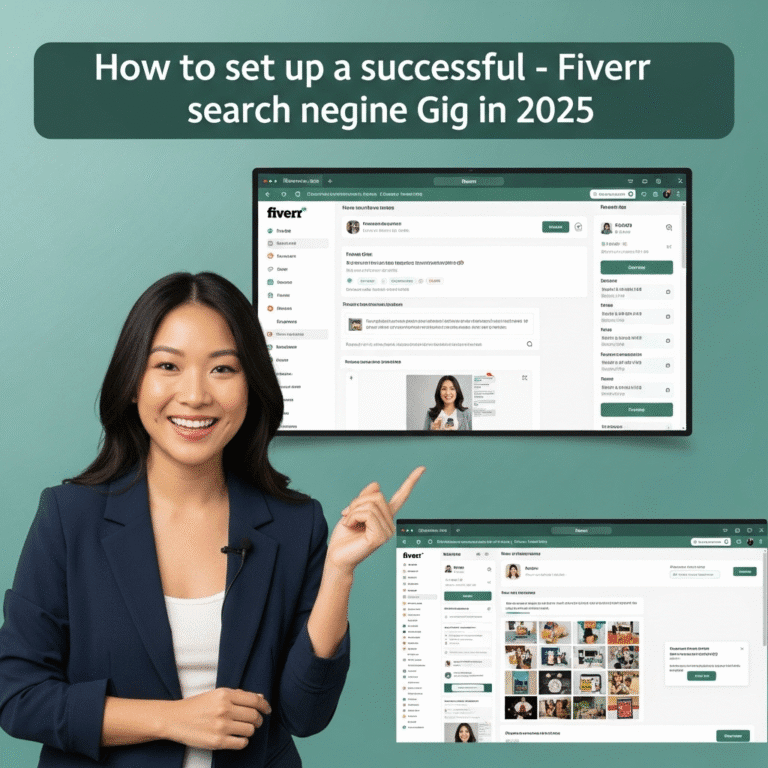
If you haven’t created your gig yet, How to Set Up a Fiverr Gig walkthrough covers the exact setup process.
If I had to start completely over with zero experience again, I’d go straight to Fiverr first and treat Upwork as a secondary platform once I had a few reviews to show.
Fiverr vs. Upwork vs. Contra — Which One Should You Pick
| Platform | Best For Beginners? | How You Get Work | Fees | Time to First Client |
| Fiverr | Yes | Buyers find your gig through search | 20% commission | 1–3 weeks |
| Upwork | Harder for true beginners | You apply with proposals (costs connects) | Sliding scale, up to 10% | 3–6 weeks without reviews |
| Contra | Not ideal to start | Portfolio-based, needs existing audience | 0% commission | Slow without outside traffic |
If you have zero reviews and zero portfolio → start on Fiverr. The search-based discovery model gives new profiles a real shot at visibility, especially in low-competition niches.
If you already have 2–3 client testimonials from anywhere (even unpaid work for a friend’s small business) → Upwork becomes viable, because you can use those as proof in your proposals.
If you have an existing following on social media or a niche audience → Contra makes sense, since it relies on you bringing your own traffic rather than the platform supplying it.
Skills That Work When You Have Zero Experience
You don’t need to be an expert. You need a skill where “good enough” still solves someone’s actual problem. Here’s what worked for me and for other students I’ve talked to since:
If you can write clearly in English → start with short blog posts, product descriptions, or social media captions. Low competition in micro-niches (e.g., writing for local Australian or Canadian small businesses rather than competing in the oversaturated “freelance writer” general category).
If you’re detail-oriented and patient → data entry and transcription gigs are some of the easiest to get approved for. Pay is lower per hour, but the barrier to your first sale is almost zero.
If you know basic Canva or have an eye for layout → simple social media graphics, presentation slides, or resume templates sell consistently to small business owners and fellow students.
If you’re comfortable on camera or with editing apps → short-form video editing for content creators is one of the highest-demand, lowest-competition skills right now, especially if you already use TikTok or Reels editing tools casually.
For more options beyond these four, check our full list of 30 Best Freelance Skills for Beginners.
The pattern across all of these: pick something you can demonstrate with a sample in under two hours. If creating a sample feels overwhelming, the skill is too advanced to start with.
What Your First Week Actually Looks Like
Nobody tells you this part, so here it is straight.
Day 1–2: You set up your profile, write your gig description, upload 2–3 sample pieces you create specifically to show your work (not real client work, since you don’t have any yet). This alone takes longer than people expect — budget a full evening for it.
Day 3–7: You send proposals or wait on gig views, depending on your platform. Views happen. Clicks happen. Replies usually don’t — yet. This is the part that makes most students quit. It’s not because the system is broken; it’s because trust takes a few days to build even with a strong profile.
Around day 10–14 for most beginners: your first message arrives. It’s rarely your dream client. Mine was a $15 blog post with vague instructions and a tight deadline. Take it anyway. Your first review matters more than your first paycheck.
After your first completed order: things start moving faster. Each review compounds — buyers trust profiles with even 2–3 reviews significantly more than profiles with zero.
When Freelancing in College Works — And When It Doesn’t
It works when you treat it as a consistent commitment, not something you do “when you have free time.” Ten focused minutes daily applying or refining your gig beats two random hours once a week.
It works when your course load has actual gaps — evenings, weekends, breaks between classes — where you can deliver work without sacrificing grades.
It does not work if you’re in a demanding program (medical school, engineering finals season, intensive lab work) where even small time commitments create real academic risk. I’ve seen students take on freelance clients during exam weeks and miss deadlines on both sides — failing the client and stressing over coursework simultaneously.
It also doesn’t work as a get-rich-quick plan. The first month is mostly setup and trust-building. Real, dependable income usually starts in month two or three, once you have a small base of repeat clients.
Mistakes That Kill Your First Gig
Overpromising in your gig description. Claiming “24-hour turnaround, unlimited revisions, expert quality” as a brand-new freelancer sets expectations you can’t consistently meet. Buyers notice when delivery doesn’t match the pitch, and your first review suffers for it.
Going silent after getting the order. Once a buyer pays, they expect updates. Even a quick “working on this, will deliver by Thursday” message prevents anxious buyers from canceling or leaving a nervous review.
Ignoring the brief and doing what you think is better. This is the single most common reason beginners get poor reviews. If the brief says 500 words, deliver 500 words — not 1,200 because you thought more was better. Following instructions exactly matters more than creative liberty when you have zero reputation built up.
Pricing too low for too long. Charging $5 for work that takes three hours burns you out fast. Use your first 3–5 reviews to gradually raise prices — don’t stay at rock-bottom pricing once you have proof you deliver.
Applying to everything instead of staying focused. Jumping between five unrelated skill categories dilutes your profile and confuses your gig’s search ranking. Pick one lane for your first month.
Once your gig is live, see our guide on 8 Easy Tips to Rank Your Fiverr Gig on the First Page to get more visibility.
Decision Checklist Before You Start
- I’ve picked one specific skill I can demonstrate with a sample today
- I have 2–3 free hours this week to build my profile and samples
- I can commit to checking messages and applying daily for the first 2 weeks
- My course schedule has actual free time blocks, not just “hopefully free” time
- I’m prepared for 1–2 weeks of zero responses before my first client
- I’ve set realistic starting prices, not “expert” pricing
- I have a payment method ready (bank account, Payoneer, or similar)
If you can’t check most of these boxes yet, fix that first — applying with an incomplete setup wastes your early momentum.
Stuck? Here’s How to Diagnose the Problem
If you’re getting zero gig views or impressions → your gig title or tags likely don’t match what buyers actually search for. Rewrite your title using the exact phrase a buyer would type, not a creative or clever version of it.
If you’re getting views but zero messages → your gig description or thumbnail isn’t convincing. Check if your sample work is visible and relevant, and make sure your description answers “what exactly do I get” in the first two lines.
If you’re getting messages but no orders → your response time or pricing is likely the issue. Buyers comparing multiple freelancers often go with whoever replies fastest and clearest.
If you got one order but no repeat clients → review your delivery quality and communication during the project. A single late delivery or vague update can be enough to lose a repeat client, even if the final work was solid.
This Is NOT For You If…
You’re looking for guaranteed income by a specific deadline. Freelancing income is inconsistent at first — it’s not reliable enough to count on for an exact bill due in two weeks.
You can’t handle silence or rejection without giving up. The first stretch involves a lot of no-responses. If that derails your motivation completely, this path will frustrate you more than help you.
You don’t have any consistent free time in your schedule. Squeezing freelancing into an already-overloaded week usually means rushed, lower-quality work — which actively damages your profile rather than building it.
You’re hoping to replace a part-time job’s stability immediately. Freelancing replaces traditional income over months, not week one.
Frequently Asked Questions
Can a college student really freelance with no experience?
Yes. Most successful beginner freelancers start with zero formal experience. What matters is choosing a skill you can demonstrate, not one you’ve been professionally trained in.
How much can a beginner realistically earn in the first month?
Most students earn somewhere between $50–$500 in their first month, depending on time invested and skill chosen. Data entry and transcription tend to be lower but more consistent; writing and design can earn more per gig but take longer to land the first client.
Do I need a portfolio before I start?
No formal portfolio is required. Create 2–3 sample pieces specifically to showcase your skill — these work just as well as real client work when you’re starting out.
Is Fiverr or Upwork better for college students?
Fiverr tends to work better for true beginners because of its search-based discovery model. Upwork becomes more useful once you have a few reviews or existing testimonials to include in proposals.
How many hours per week should a student dedicate to freelancing?
Five to ten focused hours per week is enough to build momentum without harming your academics. Consistency matters more than total hours.
What’s the biggest reason beginner freelancers fail?
Quitting during the first two weeks of silence. Most students give up right before momentum would have kicked in.
The Real Takeaway
Freelancing for college students with zero experience isn’t about finding some secret platform or hidden skill nobody else knows about. It’s about picking one thing you can actually deliver, pricing it so a stranger is willing to take a chance on you, and showing up daily until that first review lands.
The first two weeks feel like nothing is happening. That’s normal — not a sign to quit. My first $500 came from eleven small gigs that started with one $15 blog post and a buyer willing to take a chance on a profile with zero reviews.
Pick your skill today. Build your samples this week. Send your first ten applications before you talk yourself out of it.
If freelancing platforms aren’t an option where you live yet, check out Best Micro Jobs Without PayPal in Pakistan for alternative ways to start earning.
Have you tried freelancing in college? Share what worked — or didn’t — in the comments below.