Payoneer Withdrawal in Pakistan: The $50 Rule + Fee Hike
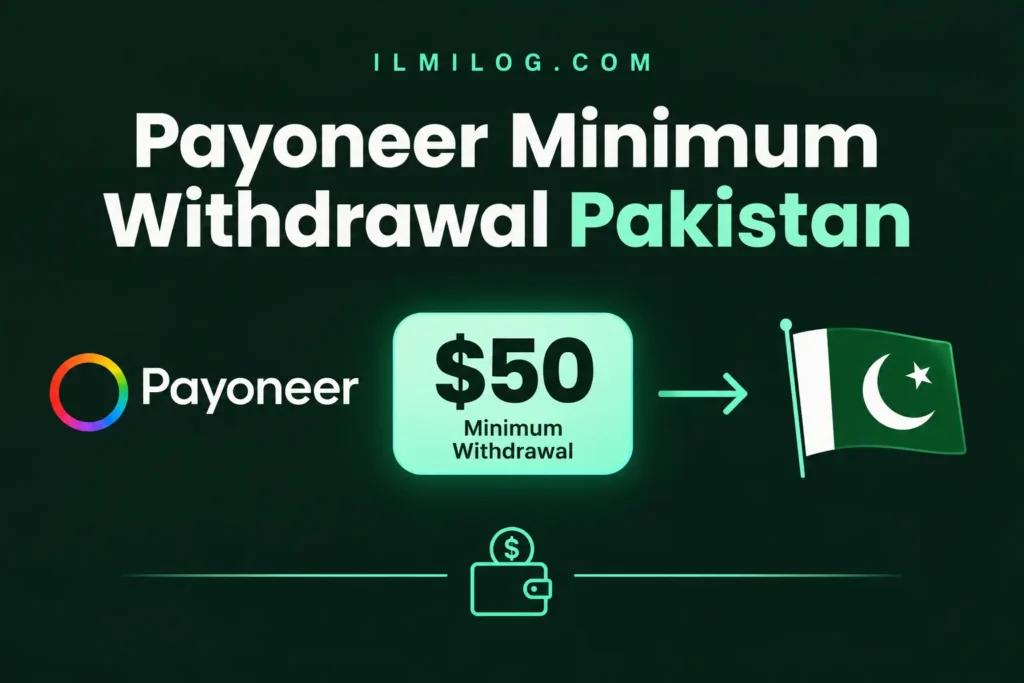
Quick Answer: Payoneer’s own resource pages state the minimum bank transfer withdrawal is usually $50, and that number lines up with what freelancers across multiple community forums report running into when they try to withdraw smaller balances. The bigger issue for Pakistan-based users right now isn’t the minimum itself — it’s a 2025 fee change that pushed bank transfer withdrawals to a flat 3% for many account types, which caught a lot of freelancers off guard because Payoneer didn’t make the change especially visible. Knowing both numbers before you’re staring at a stuck withdrawal saves real frustration.
If you haven’t set up a Payoneer account yet, none of the withdrawal details below matter until that’s done — our guide to creating a Payoneer account in Pakistan covers registration and verification from the start.
What you’ll learn: → The real minimum balance you need before a bank transfer withdrawal is even possible → Why Payoneer’s fee structure for Pakistan changed in 2025, and what that means for your take-home amount → What actually happens between initiating a withdrawal and money landing in your account → A lower-friction alternative if your balance is sitting just under the threshold → What to check first if a withdrawal is stuck or rejected
The Actual Minimum, and Why It’s Hard to Find
Payoneer’s own resource pages state the minimum bank transfer withdrawal is usually $50, though the exact figure can vary by country and currency. What’s genuinely frustrating about this number is how hard it is to find before you actually need it. A recurring pattern across freelancer forums is someone with $20 to $60 sitting in their account, trying to withdraw, and getting a vague error message about being under the allowed minimum with no number attached to explain it.
The practical takeaway: don’t assume a small balance is instantly withdrawable. If you’re under roughly $50, the more useful move is usually to wait until another payment pushes you over that line, rather than repeatedly trying and getting the same unhelpful error.
The Fee Change That Caught Pakistani Users Off Guard
This is the part of the withdrawal picture that changed recently enough that a lot of existing guides still don’t mention it. In 2025, Payoneer introduced a flat 3% withdrawal fee for many Pakistan-based users on transfers to non-local currency bank accounts, a meaningful increase from the partially lower or free rates that applied before. Coverage from The Express Tribune documented the change and the frustration it caused among Pakistani freelancers who’d built their pricing around the older, lower fee structure.
What this means practically: a withdrawal that used to cost you close to nothing in fees now takes a real, noticeable cut. On a $500 withdrawal, a 3% fee is $15 — not enormous, but enough that it’s worth factoring into how you price your work if you’re a freelancer setting rates based on what actually lands in your account.
If you’re quoting rates to international clients, building this fee into your pricing rather than absorbing it silently is worth considering. A freelancer charging $500 for a project and losing $15 to withdrawal fees on top of whatever platform fee the marketplace itself already takes is effectively working for less than the quoted rate suggests. Adjusting a rate card slightly upward, or being transparent with direct clients about payment processing costs, is a more sustainable approach than discovering the gap every time a withdrawal lands lower than expected.
What Withdrawal Actually Costs You, Step by Step
Fees on Payoneer aren’t limited to the withdrawal itself. Currency conversion, when your balance currency doesn’t match your bank account’s currency, adds its own percentage on top. ATM withdrawals through a Payoneer card carry a separate flat fee per transaction beyond whatever conversion applies. Payoneer’s official pricing page is the most reliable place to check your exact current rates, since fees are reviewed and adjusted periodically rather than staying fixed, and the numbers you see when signed into your own account reflect your specific account type and currency corridor more precisely than any general guide can.
The practical habit worth building: check your actual fee breakdown inside the withdrawal confirmation screen before you submit, not after. Payoneer shows the exact amount you’ll receive, fees already subtracted, before you confirm — that number, not the balance you started with, is the one to plan around.
How Long a Withdrawal Really Takes
Once initiated, a bank transfer withdrawal typically moves within a few business days, though the exact timing depends on your specific bank’s own processing on the receiving end as much as it does on Payoneer. Weekends and Pakistani bank holidays can add a day or two beyond what you’d expect on a straightforward business-day count. If a withdrawal is taking noticeably longer than that without any status update, checking your account’s transaction history for a pending or flagged status is more useful than assuming it’s simply slow.
If Your Balance Is Under the Minimum
If you’re sitting under the roughly $50 threshold and need access to funds sooner rather than later, our guide to linking a bank account to Payoneer is still worth having set up correctly regardless of your current balance, since a correctly linked account is what lets a withdrawal go through instantly once you do cross the minimum, rather than adding a setup delay on top of the wait.
Beyond simply waiting for your balance to grow, there isn’t a reliable way around the minimum threshold itself — it’s a platform-wide rule, not a Pakistan-specific restriction, so it applies the same way regardless of which bank you’re withdrawing to.
The Annual Fee Problem Nobody Warns You About
Payoneer charges a dormancy-related annual fee on accounts that don’t receive enough in payments over a 12-month period. For someone earning irregularly or just starting out, this means a balance sitting untouched for a year can quietly shrink from an inactivity charge before you’ve even withdrawn anything. Checking your account’s fee schedule periodically, especially during slower income months, catches this before it becomes a surprise deduction.
Common Mistakes That Cause Withdrawal Problems
Trying to withdraw a balance under roughly $50. This is the single most common source of confusion, largely because the exact threshold isn’t prominently displayed until you hit it.
Not accounting for the 2025 fee change when pricing client work. Freelancers who set rates based on older, lower withdrawal fees are effectively taking a pay cut they haven’t adjusted for.
Assuming a delayed withdrawal is a Payoneer problem rather than a bank one. Receiving-bank processing time is often the actual bottleneck, not Payoneer’s side of the transfer.
Letting a balance sit inactive for a year. The dormancy fee is easy to avoid simply by knowing it exists and checking your account periodically.
Problem Diagnosis: Withdrawal Stuck or Rejected?
If a withdrawal won’t submit at all, check your balance against the roughly $50 minimum first — this resolves the majority of cases. If it is submitted but hasn’t arrived after several business days, check your transaction history for a status update before assuming it’s lost, since receiving-bank delays are common and don’t always show up as an error on Payoneer’s side. If the amount that arrived is noticeably lower than expected, revisit the fee breakdown shown at the time you confirmed the withdrawal — the 2025 fee change surprises people specifically because the deduction is easy to miss if you’re not looking for it.
When Waiting Makes More Sense Than Withdrawing
Skip withdrawing right now if: your balance is under the minimum threshold and you don’t have an urgent need for the funds — waiting for your balance to grow avoids a failed attempt and the wasted time of troubleshooting an error that has a straightforward cause. Skip frequent small withdrawals in general if you can batch them into fewer, larger transfers instead, since each withdrawal carries its own fee regardless of size.
This is worth doing now if: you’re above the minimum, need the funds, and have already factored the current fee percentage into what you’re actually going to receive.
Decision Checklist
- I’ve confirmed my balance is above the roughly $50 minimum before attempting a withdrawal → avoids the most common failed attempt
- I’ve checked the current fee percentage on Payoneer’s pricing page rather than assuming an older rate still applies → prevents pricing surprises
- I understand receiving-bank delays are separate from Payoneer’s own processing time → sets realistic expectations
- I’m not letting a balance sit inactive for close to a year → avoids the dormancy fee
- I’m withdrawing in fewer, larger transfers rather than many small ones → reduces the total fees paid over time
Honest Verdict
| What Works | What Doesn’t |
| Waiting until your balance clears the minimum before attempting a withdrawal | Repeatedly trying to withdraw a balance under roughly $50 |
| Checking the live pricing page for your current fee rate | Assuming an older, lower fee still applies after 2025 |
| Batching withdrawals into fewer, larger transfers | Frequent small withdrawals that each carry their own fee |
| Checking your account periodically during slow income months | Letting a balance sit untouched for close to a year |
Best for: freelancers and remote workers who withdraw regularly and have priced their work with the current fee structure in mind.
Skip overthinking it if: your balance is comfortably above the minimum and you’re withdrawing in reasonable, infrequent batches — for most users in that position, the process is straightforward.
FAQ
Q: What’s the actual minimum amount I can withdraw from Payoneer?
Payoneer’s own guidance states the minimum bank transfer withdrawal is usually $50, though this can vary by country and currency corridor.
Q: Why did my withdrawal fee suddenly increase?
Payoneer introduced a flat 3% withdrawal fee for many Pakistan-based users in 2025, a real increase from the lower rates that applied previously.
Q: How long does a withdrawal take to reach a Pakistani bank account?
Typically a few business days, though your specific bank’s own processing time, along with weekends and holidays, can extend that beyond a simple business-day count.
Q: Will I be charged if my account sits inactive?
Yes, an annual dormancy-related fee applies to accounts that don’t receive enough in payments over a 12-month period, which is worth knowing if your income is irregular.
Q: Is there any way to withdraw below the minimum threshold?
Not through the standard bank transfer process. The minimum is a platform-wide rule, so waiting until your balance clears it is the realistic path rather than looking for a workaround.
Final Recommendation
Check your current balance against the roughly $50 minimum before attempting a withdrawal, and check Payoneer’s live pricing page for your actual current fee rate rather than relying on an older number you may have seen before 2025. If a physical card feels like a better fit for how you access funds day to day, our guide to getting a Payoneer card in Pakistan covers that option in full, including its own separate fee structure.
Researched and written by the ilmilog.com editorial team. Withdrawal minimums, fee changes, and processing details confirmed against Payoneer’s own resource and pricing pages, and cross-checked against Express Tribune’s coverage of the 2025 Pakistan fee change, as of July 2026. This article is general information, not financial advice, and Payoneer’s fees and thresholds can change — always confirm current details directly on Payoneer’s official site before withdrawing.