Can You Use AI for Exam Prep? The Real Answer Isn’t Yes/No
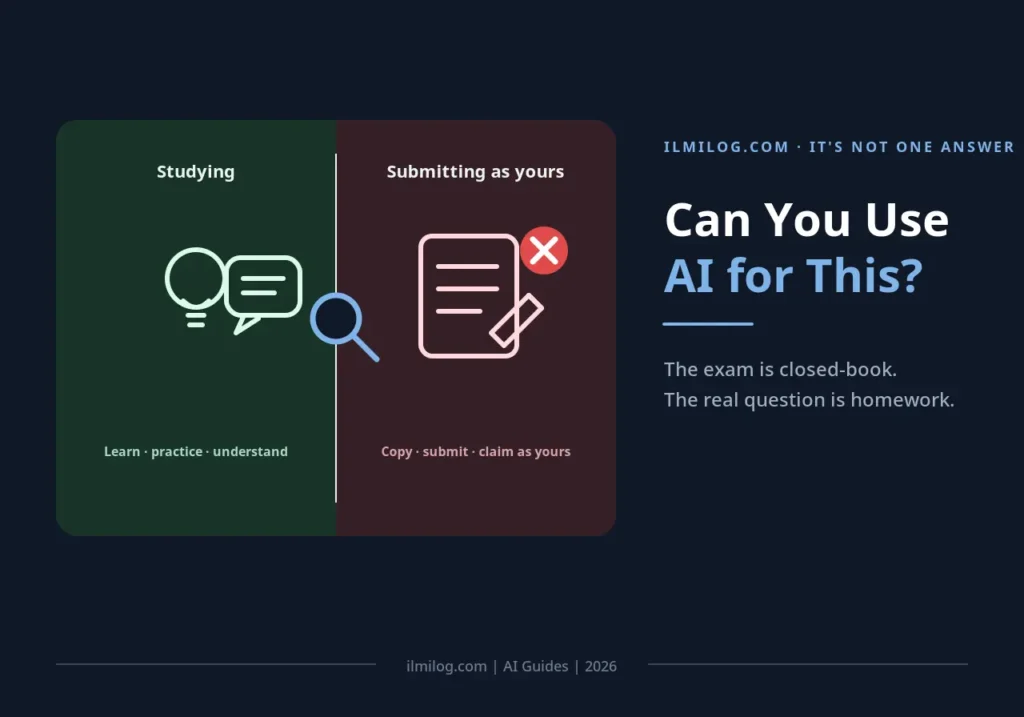
Quick Answer: For studying and preparation, yes, without much controversy. For anything that gets submitted as your own work and graded, or for anything during the actual closed-book exam itself, no. The real distinction isn’t about the tool at all — it’s about whether AI is helping you understand something before an assessment, or replacing the work an assessment is meant to measure.
If you’re looking for the practical side of this rather than the permission question, our study guide covers how to actually use it well.
Why This Isn’t a Clean Yes or No
Board exams are closed-book and physically invigilated, so there’s no scenario where AI is even reachable during the actual paper — that part of the question answers itself. What people are really asking is broader: is it okay to use AI while preparing, while doing homework, while working through assignments that get submitted and graded. That’s where a single yes or no stops being useful, because the answer genuinely depends on what happens to the output afterward.
Academic integrity organizations that study this exact question generally frame it the same way — the tool itself isn’t the issue, what happens to the output is.
What’s Clearly Fine
Using AI to understand a concept you’re stuck on, generate extra practice questions, check your own worked answer against an explanation, or get a topic explained a different way than your textbook covers it — none of this involves submitting AI output as your own graded work. It’s closer to using a tutor or a study group than to anything resembling academic dishonesty, and there’s no meaningful gray area here.
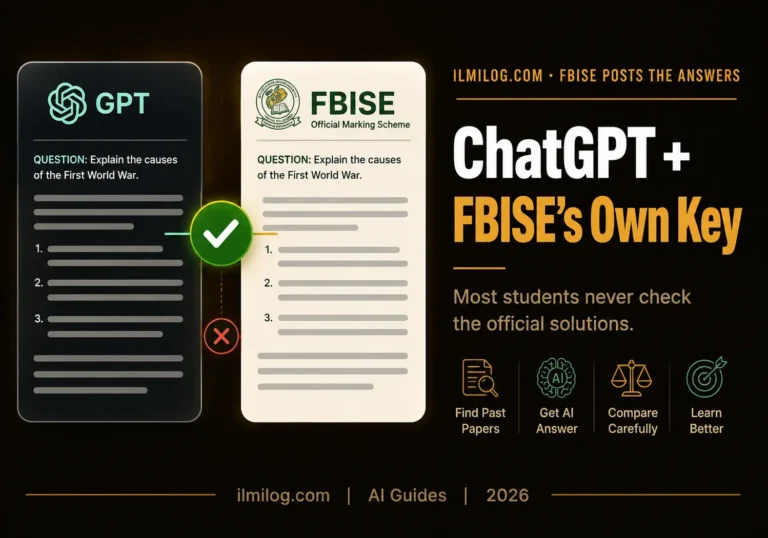
This category also covers things students sometimes assume are riskier than they actually are: asking AI to quiz you on a topic, having it generate a mock timed test, or using it to explain why a past paper’s official answer is correct when your own attempt differed. All of these stay firmly on the preparation side of the line, since nothing produced this way ends up submitted as evidence of your own independent work.
What Clearly Isn’t
Submitting AI-generated writing as your own for a graded assignment, essay, or take-home task is the clear other end of this. So is using AI during any assessment where you’re expected to work independently, whether that’s a closed-book exam or a supervised in-class test. If the output is going in as evidence of what you personally know or can do, and it wasn’t actually produced by you, that’s the line most schools’ academic integrity policies exist specifically to address.
The Gray Area: Take-Home Work
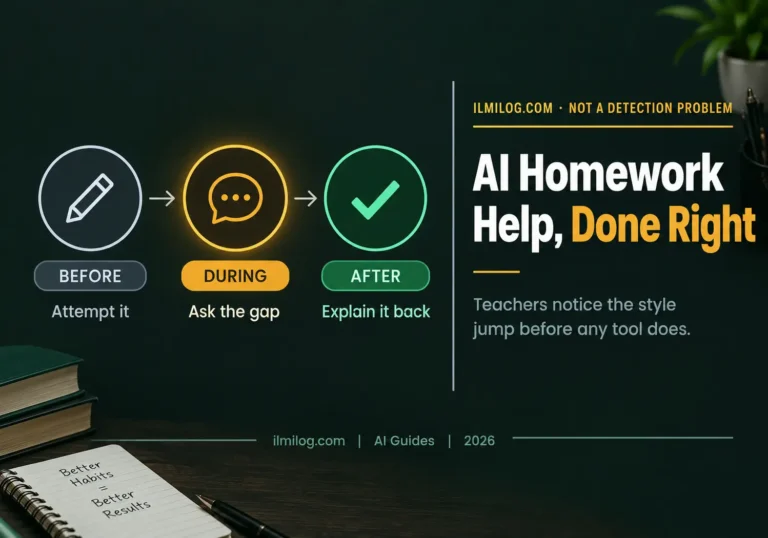
This is where genuine confusion lives, and it’s worth being honest about rather than pretending it’s simple. A take-home assignment sits somewhere between pure preparation and a formal exam — it’s graded, but it’s also meant to reflect independent understanding built up over the preparation period. Using AI to check your understanding of a completed assignment is different from using it to write the assignment for you, even though both technically involve the same tool.
A reasonable test: if you closed the AI conversation right now, could you explain and defend what you submitted in your own words. If yes, you likely used it the way most schools intend — as a study aid. If no, that’s worth reconsidering before submitting, regardless of what any specific policy technically allows.
This test matters more than it might seem because it doesn’t depend on knowing your school’s exact written policy. Even schools without detailed AI-specific guidance yet almost universally expect submitted work to reflect genuine understanding, and that expectation predates AI entirely — it’s the same principle that’s always applied to copying a classmate’s homework or having someone else write an essay for you. The tool changes; the underlying expectation about submitted work being genuinely yours doesn’t.
What Your School’s Policy Actually Covers
Academic integrity policies vary by school, and increasingly by individual teachers within the same school, since this is a genuinely new area many institutions are still actively updating guidance on. OpenAI’s own usage policies address academic contexts directly and are worth reading alongside your school’s specific rules, since the two aren’t always identical.
The practical takeaway: don’t assume a blanket answer applies everywhere. What’s fine at one school for one assignment type might not be at another, and the safest approach is checking directly rather than guessing based on what a general article says is normal. JISC’s guidance on generative AI in education, developed for schools across the UK, covers similar reasoning that applies just as well outside that specific context.
The Bigger Risk Isn’t Getting Caught
Here’s the part that gets underweighted in most discussions of this topic. Even setting aside academic integrity concerns entirely, relying on AI output you didn’t actually understand creates a specific, predictable problem: you walk into a closed-book exam having memorized an explanation rather than genuinely understood the material, and closed-book conditions expose that gap immediately. Our past papers guide covers a verification method built specifically to catch this gap before exam day rather than during it. The practical cost of skipping real understanding isn’t a policy violation — it’s showing up to the one moment that actually matters without the preparation the whole process was supposed to build.
Common Mistakes Students Make
Treating “is this allowed” as a single question with one answer. As covered above, preparation, homework, and exam conditions are genuinely different situations with different answers.
Assuming a friend’s school policy applies to yours. Policies vary enough between schools, and even between teachers, that assuming uniformity leads to real mistakes.
Confusing “I could explain this if asked” with actually being able to. The honest self-test only works if you’re genuinely honest with yourself about the answer.
Not asking a teacher directly when genuinely unsure. A quick, direct question resolves ambiguity far faster than guessing based on a general guide, including this one.
Problem Diagnosis: Not Sure Where You Stand?
If you’re unsure whether something you did crosses a line, the honest self-test above — could you explain and defend it without the AI output in front of you — is the fastest real check. If a specific assignment’s rules feel genuinely ambiguous, that’s the signal to ask your teacher directly rather than assume either way, since guessing wrong in either direction has real costs. If you’ve already submitted something you’re now unsure about, raising it proactively with a teacher is almost always a better outcome than staying quiet and hoping it doesn’t come up.
When to Just Ask Your Teacher Directly
Skip guessing entirely if: a specific assignment or subject’s rules aren’t clearly stated anywhere you’ve seen. A short, direct question to your teacher resolves this faster and more reliably than any general guide, including this one, since your specific school’s policy is the only one that actually applies to you.
This article is useful as a starting framework if: you want to understand the general reasoning most policies are built on before checking your specific school’s exact rules.
Decision Checklist
- I understand board exams are closed-book, so this question is really about preparation and homework, not the exam itself → sets the right frame from the start
- I use AI to understand material, not to produce graded work I didn’t actually do → the core distinction that matters
- I can explain and defend anything I submit without the AI conversation in front of me → the honest self-test worth applying
- I’ve checked my specific school’s policy rather than assuming a general answer applies → policies genuinely vary
- I ask my teacher directly when a specific situation feels ambiguous → faster and more reliable than guessing
Honest Verdict
| What’s Clearly Fine | What Clearly Isn’t |
| Using AI to understand a stuck concept | Submitting AI-written work as your own graded assignment |
| Generating extra practice questions | Using AI during any closed-book or supervised exam |
| Checking your own answer against an explanation | Assuming one school’s policy applies everywhere |
| Asking a teacher when genuinely unsure | Guessing instead of checking your specific school’s rules |
Best for: students who want a genuine study aid and are honest with themselves about the difference between understanding something and having AI produce it for them.
Skip the gray areas entirely if: you’re not sure — asking your teacher directly costs a few minutes and removes the ambiguity completely.
FAQ
Q: Can I use AI during the actual matric exam?
No. Board exams are closed-book and invigilated, so this doesn’t apply during the paper itself, only to preparation beforehand.
Q: Is it cheating to use AI for homework?
It depends on what the homework is checking and what you submit. Using it to understand material before doing your own work is different from submitting AI-generated output as your own.
Q: What if my school doesn’t have a clear policy yet?
Ask your teacher directly. Many schools are still actively updating guidance on this, and a direct question resolves ambiguity faster than assuming either way.
Q: Does using AI to study count as an unfair advantage?
Generally no, in the same way a tutor, study group, or reference book isn’t considered an unfair advantage — the concern is specifically about submitted work, not preparation.
Q: What’s the actual risk if I rely on AI without really understanding the material?
Beyond any policy question, you risk walking into a closed-book exam having memorized an explanation instead of genuinely understanding it, and exam conditions expose that gap immediately.
Final Recommendation
Use AI freely for preparation and understanding, be honest with yourself about the difference between studying with it and having it produce your submitted work, and ask your teacher directly whenever a specific situation feels ambiguous. For the practical side of using it well once you’ve settled the permission question, our exam prep guide covers that in depth.
Researched and written by the ilmilog.com editorial team. General academic integrity principles referenced from the International Center for Academic Integrity as of July 2026. This article reflects general reasoning, not official exam board or school policy — always confirm your specific school’s current rules directly with your teacher.