FBR Tax Filing for Freelancers: The Date Mistake Everyone Makes
Quick Answer: Filing means logging into FBR’s IRIS portal, going to Declaration, then 114(1) Return of Income, selecting the correct tax year, declaring your freelance income under the Foreign Source Income or Export of Services section rather than as salary, completing the mandatory Wealth Statement so it reconciles with your declared income, and submitting before September 30. The part that trips up almost every first-time filer isn’t any of those steps individually — it’s confusion about which tax year covers which months, which causes people to declare the wrong period’s income entirely.
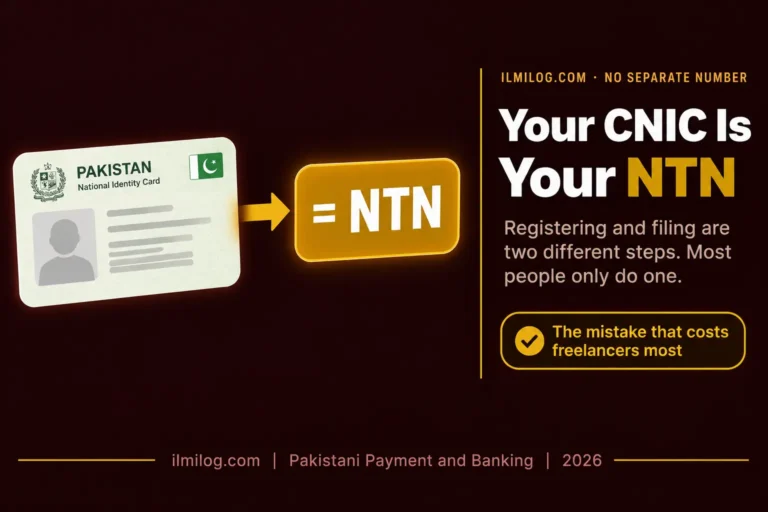
Filing assumes your registration is already active — if it isn’t yet, our NTN guide covers that foundation first.
What you’ll learn: → The date confusion that causes first-time filers to declare the wrong period’s income → Exactly what documents to gather before you open IRIS → Where freelance export income gets entered, and why it isn’t the salary section → The Wealth Statement requirement most explanations barely touch, and why a negative reconciliation is a real problem → What happens after submission, and what a missed deadline costs
The Date Confusion That Trips Up First-Time Filers
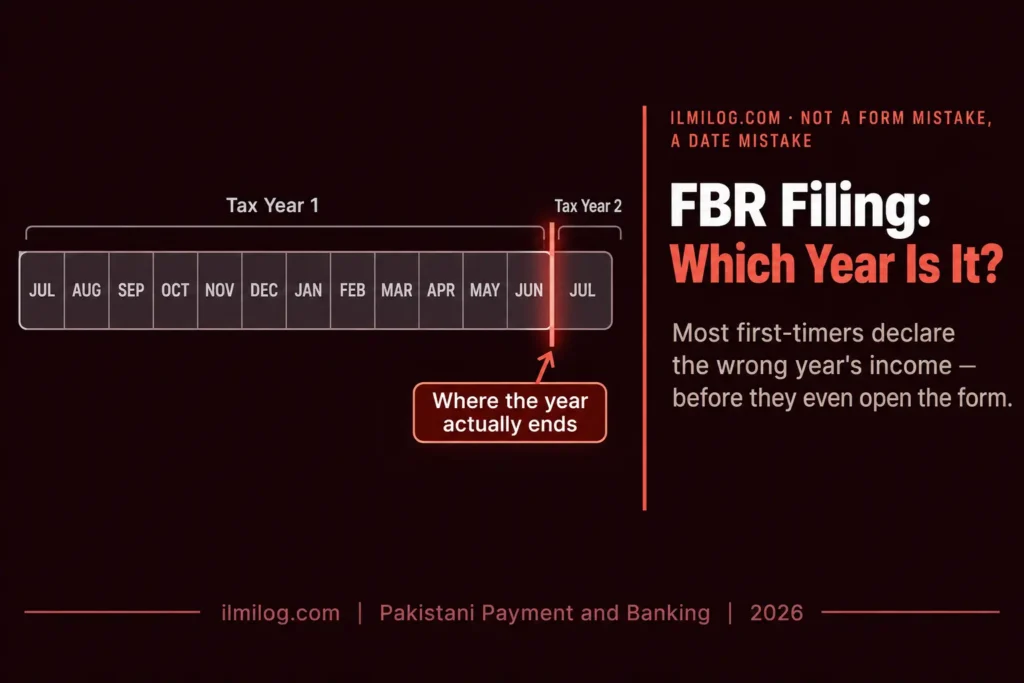
Tax Year 2026 covers income from July 1, 2025 through June 30, 2026 — not the calendar year, and not the months you happen to be sitting down to file in. Physically filing your return in August or September 2026 doesn’t make those months part of Tax Year 2026; it just means you’re filing for the period that already closed on June 30. A payment received in July 2026 belongs to the following tax year, filed the following season, regardless of how close it feels to your current filing.
This sounds obvious once it’s stated plainly, but it’s a genuinely common source of error — freelancers declare income from the wrong window, either including a payment that hasn’t crossed into the covered period yet or missing one that has, simply because the tax year concept doesn’t map onto how a calendar year feels intuitively.
The safest habit is checking each payment’s actual date against the July-to-June window rather than trusting memory. A payment that arrived in your bank account in late June feels recent enough to seem like “this year’s” income when you’re filing in September, but it’s already inside the closed period you’re declaring — while a payment landing in early July, even just days later, belongs to the next filing cycle entirely.
What You Need Before You Start
Gather these before opening IRIS rather than mid-session: your NTN and IRIS password, bank statements covering the full tax year, Proceeds Realization Certificates for your foreign remittances, and a record of any significant assets purchased during the year — a laptop, a vehicle, anything that needs to show up on your Wealth Statement. Having your closing bank balance as of June 30 ready in advance saves considerable back-and-forth once you’re inside the actual form.
The Actual Filing Steps
Log into iris.fbr.gov.pk with your NTN and password. From the menu, select Declaration, then 114(1) Return of Income, and choose the correct tax year — this is the exact point where the date confusion above most often causes a wrong selection, so double-check it before proceeding.
Inside the return, freelance and business income from international clients doesn’t belong under the Employment or Salary heading, even though that section sometimes sits more prominently on the form. It belongs under the Foreign Source Income or Export of Services section specifically, which is where income taxed under the final tax regime covered in our guide to Pakistan’s 1% freelancer tax gets declared. Enter your gross remittance figures here, matching what your Proceeds Realization Certificates show, rather than a net figure after your own expenses.
The Wealth Statement Nobody Explains Well
This is the part of filing most explanations mentioned in passing without making clear why it matters as much as it does. Under Section 116, individual filers must submit a Wealth Statement alongside the return — a full declaration of assets and liabilities that has to be reconciled against your declared income for the year.
The logic is straightforward once it clicks: your assets at the start of the year, plus your declared income, minus your expenses, should roughly equal your assets at the end of the year. List property, vehicles, bank balances, and significant purchases as assets; list loans and outstanding dues as liabilities. If that reconciliation doesn’t add up — particularly if it comes out negative, meaning your assets grew by more than your declared income and recorded expenses can explain — that’s a real red flag FBR’s system can flag for review, not a cosmetic form-filling detail to rush through.
Family Money Isn’t the Same as Freelance Income
Receiving foreign money doesn’t automatically mean receiving taxable income, and freelancers sometimes struggle with this distinction more than salaried filers do because their bank statements mix both. A relative sending money for family support is a different transaction than a client paying for delivered work, even if both arrive as similar-looking foreign remittances. Identifying what each incoming transfer represents before you declare it prevents both over-declaring gift money as taxable income and, just as importantly, under-declaring genuine freelance earnings by miscategorizing them the other way.
What Happens After You Submit
Once submitted, download your acknowledgment receipt and keep it somewhere safe — it’s your proof of filing if a question ever comes up later, and it’s genuinely inconvenient to have to prove filing happened without it. If FBR’s system flags something in your return, you’ll typically hear back through your registered IRIS account or your NADRA-linked contact details rather than an unsolicited phone call, which is worth remembering given how many fraud attempts specifically impersonate FBR contact.
What a Missed Deadline Actually Costs
Beyond the immediate withholding rate consequences already tied to non-filer status, missing the filing deadline itself carries a separate penalty, generally ranging from roughly Rs. 1,000 to Rs. 40,000 depending on your income level and how late the filing is. FBR’s own site lets you check your current Active Taxpayer List status directly rather than guessing where you stand. That’s on top of continuing to face non-filer withholding rates on ordinary transactions until you do file, which for a regularly earning freelancer usually adds up to more than the late-filing penalty itself over time.
Common Mistakes During Filing
Declaring the wrong tax year’s income. Covered above, but worth repeating on its own: this is the single most common structural mistake first-time filers make.
Entering freelance income as salary. It changes which sections of the return apply and can affect the final tax treatment your export income is entitled to.
Treating the Wealth Statement as an afterthought. A rushed or incomplete reconciliation is more likely to trigger review than a careful one, even when nothing questionable is going on.
Mixing gift or family remittances with freelance earnings without separating them. This muddies both figures and makes an accurate reconciliation harder than it needs to be.
Problem Diagnosis: Reconciliation Not Matching?
If your Wealth Statement doesn’t balance, start by checking whether every significant asset purchase during the year is listed — a missing vehicle or a large purchase left off the asset side is the most common cause of an unexplained gap. If the gap runs negative, revisit whether all your income sources for the year, including anything outside your main freelance earnings, are fully declared. If you’ve checked both and it still doesn’t reconcile, that’s the point where a tax consultant’s few hours of review usually costs less than the time you’d spend troubleshooting it alone.
When Professional Help Is Worth the Cost
Skip filing solo if: your situation involves property transactions, significant foreign assets, or income from multiple distinct sources during the year — these add real complexity to the Wealth Statement specifically, and a professional’s fee is often smaller than the cost of getting a complex reconciliation wrong. Independent professional filing guidance covers what a more complex filing situation typically involves if you want a sense of that before deciding.
This is worth doing yourself if: your income is straightforward freelance export earnings with organized bank records and no major asset purchases or complications during the year — for that situation, the process described here is genuinely manageable independently.
Decision Checklist
- I know exactly which months my current tax year covers → prevents declaring the wrong period’s income
- My freelance income is entered under Foreign Source Income or Export of Services, not salary → matches the correct tax treatment
- My Wealth Statement reconciles without an unexplained gap → the step most people underestimate
- I’ve separated family remittances from freelance earnings clearly → keeps both figures accurate
- I’ve downloaded and saved my acknowledgment receipt after submitting → your proof of filing if it’s ever needed
Honest Verdict
| What Works | What Doesn’t |
| Confirming the exact tax year period before entering anything | Assuming the filing month determines which year’s income applies |
| Declaring freelance income under Foreign Source Income specifically | Entering freelance earnings as salary |
| Treating the Wealth Statement as a real reconciliation, not a formality | Rushing through asset and liability entries |
| Separating gift money from freelance income clearly | Mixing both together as one undifferentiated remittance total |
Best for: freelancers with organized bank records and straightforward export income who are comfortable working through a structured online form independently.
Skip the DIY approach if: your financial situation during the year was unusually complex — professional review costs less than an uncorrected mistake in most of those cases.
FAQ
Q: Which months does Tax Year 2026 actually cover?
July 1, 2025 through June 30, 2026 — not the calendar year, and not based on when you’re physically filing.
Q: Do I file freelance income the same way as salary income?
No. Freelance and business income from international clients goes under the Foreign Source Income or Export of Services section, not the Employment or Salary heading.
Q: What if my Wealth Statement doesn’t reconcile?
Recheck whether every significant asset purchase and income source during the year is fully listed. A persistent, unexplained gap — especially a negative one — is worth resolving with a tax professional rather than submitting as-is.
Q: Is filing on IRIS actually free?
Yes, filing itself carries no fee. You only pay whatever tax you actually owe, separate from the filing process. Professional filing assistance, if you choose to use it, charges its own separate fee.
Q: What happens if I miss the filing deadline?
A penalty generally ranging from roughly Rs. 1,000 to Rs. 40,000 depending on income and delay, on top of continuing non-filer withholding rates until you do file.
Final Recommendation
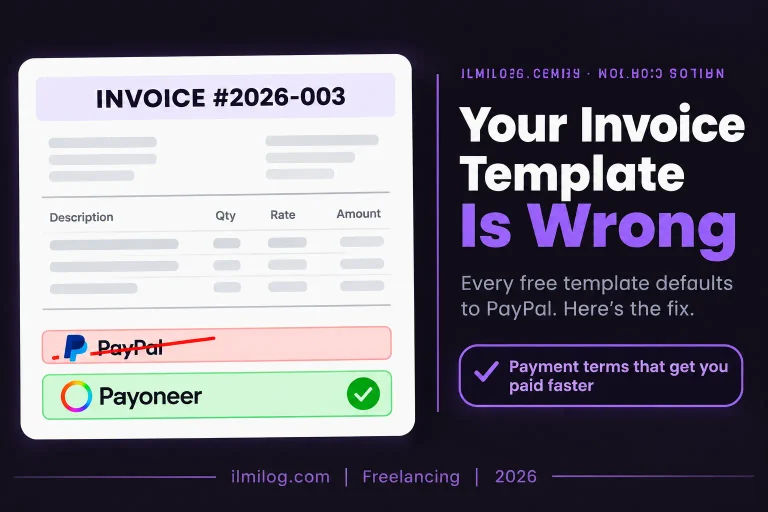
Confirm your exact tax year window before entering a single figure, keep freelance income separate from any family remittances in your own records, and treat the Wealth Statement as a genuine reconciliation rather than a box to check quickly. Organized invoices make this whole process considerably smoother — our invoicing guide covers building that documentation habit well before filing season arrives.
Researched and written by the ilmilog.com editorial team. Filing steps and requirements cross-referenced against FBR’s own IRIS portal and current professional tax filing guidance as of July 2026. This article is general information, not tax or legal advice — consult a qualified tax professional for guidance specific to your situation.