FBR NTN for Freelancers: You Already Have One (Kind Of)
Quick Answer: Here’s what almost every guide on this gets confusing: you don’t apply for a separate number. Your existing 13-digit CNIC becomes your NTN the moment you complete registration, called e-enrollment, on FBR’s IRIS portal. Registering is also not the same thing as being an active filer — that second step, filing your annual return, is what gets you onto the Active Taxpayer List and the lower withholding tax rates that come with it. Skipping either step has real, ongoing costs on everyday banking and financial transactions, not just at tax time.
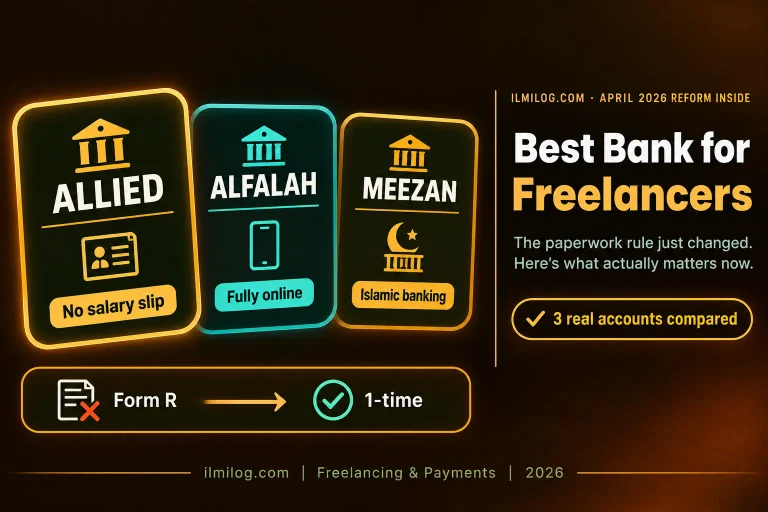
Since NTN status connects directly to opening a proper business bank account, our best bank guide is worth reading alongside this one if you haven’t set that up yet.
What you’ll learn: → Why there’s no separate NTN number to wait for, and what registration does → The exact IRIS registration steps, including the mistake that trips up freelancers specifically → Why registering alone doesn’t get you the tax benefits people assume it does → What changes on your banking and financial transactions once you’re an active filer → What to do if your registration gets stuck partway through
The Misconception That Confuses Almost Everyone
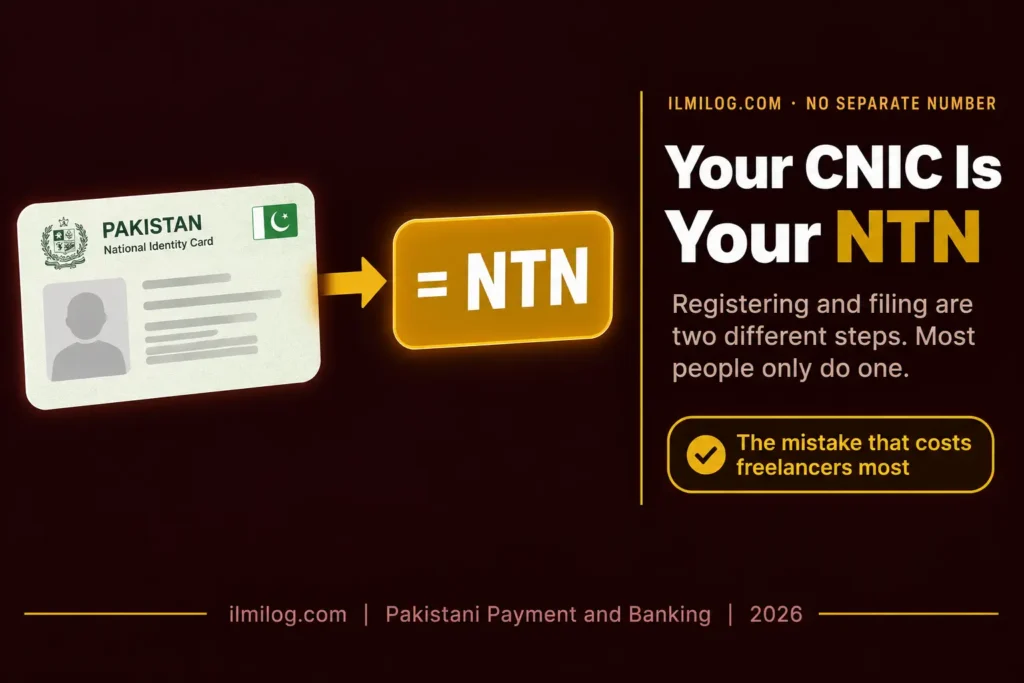
A lot of freelancers picture NTN registration as applying for a brand-new number, waiting for approval, and eventually receiving something separate from their CNIC. That’s not how it works for individuals. Your 13-digit CNIC is your NTN. Registration, called e-enrollment on FBR’s IRIS portal, simply activates CNIC inside FBR’s tax system rather than issuing you anything new.
This matters because it removes a real source of hesitation — there’s no separate document to obtain, no waiting period for a number to be assigned, and no additional identity to keep track of. The entire process is about activating a number you already have, not acquiring one you don’t.
Part of why this confusion persists is that the term “NTN number” itself implies a distinct identifier, the way a passport number or a driving license number would be. Older versions of the tax system did issue separate NTN certificates for individuals, which is likely where the expectation comes from. The current system simplified this specifically so people wouldn’t need to track a second identity alongside their CNIC — a genuine improvement that the confusing older terminology hasn’t quite caught up with.
Registering, Step by Step
Go to iris.fbr.gov.pk and select Registration for Unregistered Person below the login fields. Enter your 13-digit CNIC without dashes, select Individual as your taxpayer type, and submit. FBR sends a one-time code to the mobile number and email registered with NADRA against that CNIC — enter both codes to verify, then set a secure password you’ll use for every future login.
Once inside, go to Draft, then Registration, and open Form 181. This is where your personal details, residential address, occupation, and source of income get recorded. Accuracy here matters more than it might seem, since mismatched or vague details are a common reason registrations get delayed or rejected. Review everything carefully before submitting.
The Mistake That Costs Freelancers Specifically
This is the single most consequential error freelancers make during registration, and it’s easy to make without realizing it. When selecting your income type, choosing Salary Income when you’re not salaried limits which sections of the return are visible later and can affect your eligibility for a reduced tax treatment that applies specifically to qualifying IT and IT-enabled export income.
Select the income category that reflects freelance or business income, not salary, even if the interface makes salary look like the more familiar or default-seeming option. Getting this one field right at registration avoids a correction process later that’s more frustrating than getting it right the first time.
Registration Isn’t the Same as Being a Filer
This distinction genuinely trips people up. Completing e-enrollment gets your CNIC active in FBR’s system, but it doesn’t automatically put you on the Active Taxpayer List. That status comes from filing your annual income tax return. Someone who registers and never files is technically e-enrolled but still treated as a non-filer for the purposes that matter day to day.
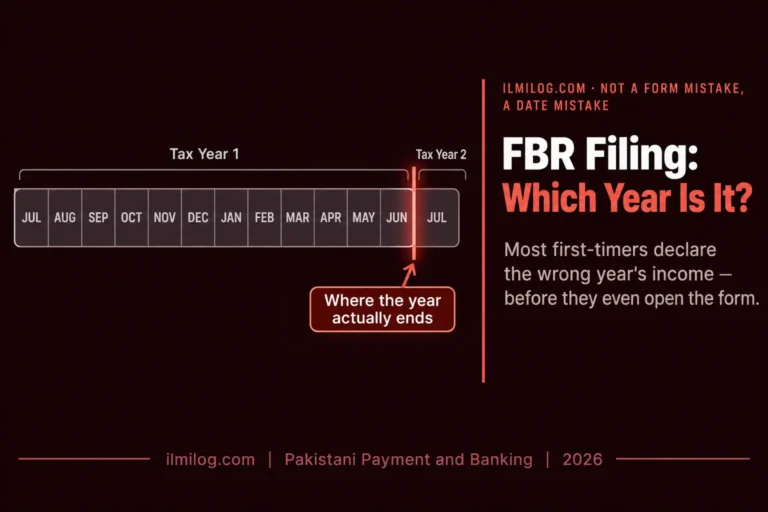
The Tax Year 2026 return, covering income from July 2025 through June 2026, is due by September 30, 2026 — worth knowing if registration has been sitting on your to-do list without a specific deadline attached to it in your head.
What Actually Changes Once You’re an Active Filer
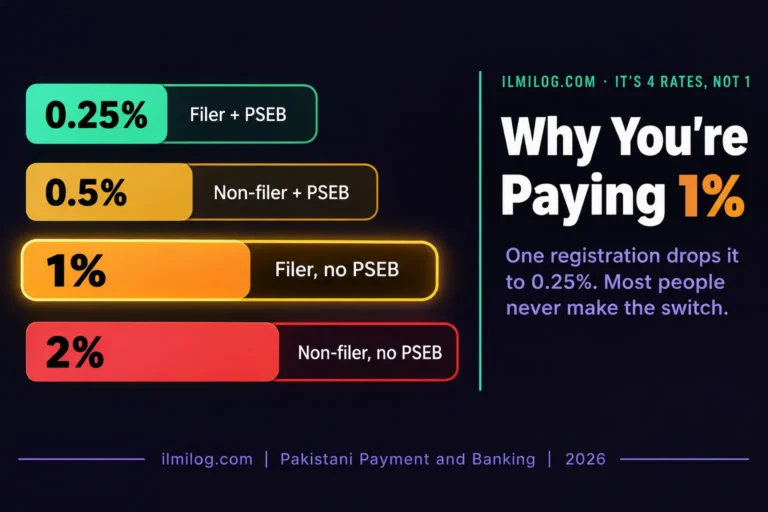
Active Taxpayer List status affects withholding tax rates on a range of everyday transactions — banking transactions, vehicle registration, and property purchases among them, with non-filers charged noticeably higher rates on the same transactions than filers. FBR’s own site publishes current Active Taxpayer List data and lets you check a specific status directly rather than relying on assumptions about where you stand. This isn’t a once-a-year cost that only shows up at tax season; it’s a rate difference that applies continuously to routine financial activity.
For freelancers specifically, there’s also a reduced tax rate available on qualifying IT and IT-enabled export income once certain conditions are met, including registration with the Pakistan Software Export Board. That’s a genuinely deep topic on its own, worth covering separately rather than compressed into a paragraph here — for now, it’s enough to know the benefit exists and connects directly to having your registration and income type set up correctly from the start.
Being properly registered also matters for opening a dedicated business or freelancer bank account, which most banks expect as part of a complete application. If you’re setting up a payment method for international clients around the same time, our Payoneer account guide covers that side of the process.
If Your Mobile Number Doesn’t Match NADRA Records
A surprisingly common snag: the verification code never arrives because the mobile number currently in your possession isn’t the one NADRA has on file against your CNIC. If that’s the situation, registration can’t proceed until it’s corrected — a visit to a NADRA e-Sahulat center to update your registered mobile number resolves this before you attempt IRIS registration again.
A Security Warning Worth Repeating
FBR will never ask for your password, PIN, or verification code by phone, SMS, WhatsApp, or email. Anyone contacting you claiming to be FBR and requesting these details is attempting fraud, not helping you complete registration faster. Always confirm you’re on iris.fbr.gov.pk specifically before entering any credentials, since look-alike domains targeting taxpayers are a real and ongoing risk.
Common Mistakes During Registration
Selecting Salary Income as a freelancer. Covered above, but worth repeating on its own: this single field affects more downstream consequences than almost anything else on the form.
Assuming registration alone means you’re done. Without filing an actual return, you remain a non-filer in practice regardless of having completed e-enrollment.
Resubmitting repeatedly after a rejection instead of diagnosing the cause. Repeated resubmission on the same CNIC can flag the account for review rather than resolving whatever caused the original issue.
Ignoring a mismatched NADRA mobile number until registration fails. Checking this before starting avoids a frustrating dead end partway through the process.
Problem Diagnosis: Registration Stuck or Rejected?
If the verification code never arrives, the NADRA-mobile mismatch covered above is the most likely cause — confirm your current SIM matches NADRA’s records before trying again. If Form 181 gets rejected, mismatched or vague details are the most common reason; review your name, address, and income type against your CNIC and other documents exactly rather than resubmitting the same information unchanged. If you’re stuck beyond what a careful review resolves, a tax consultant can diagnose the specific issue faster than repeated attempts on your own.
When You Can Reasonably Delay
Skip registering urgently if: you’re very early in freelancing with no real income yet, and you’re using this as a hypothetical planning step rather than responding to actual earnings. There’s no meaningful cost to waiting until income is real and recurring.
This is worth doing now if: you’re already receiving regular freelance income, especially from international clients, since the withholding tax rate gap between filers and non-filers applies to routine transactions you’re likely already making regardless of registration status.
Decision Checklist
- I understand my CNIC is my NTN, not a separate number I’m waiting to receive → removes the most common source of confusion
- I’ve selected the correct income type, not Salary, during registration → prevents the most consequential mistake on the form
- I know registration alone doesn’t make me an active filer → filing the actual return is the step that matters for ATL status
- My NADRA-registered mobile number is current and accessible → prevents the most common verification failure
- I’m treating any unsolicited request for my password or OTP as fraud → protects against a real, ongoing scam pattern
Honest Verdict
| What Works | What Doesn’t |
| Selecting the correct freelance or business income type | Selecting Salary Income by default |
| Filing your annual return after registering | Assuming e-enrollment alone puts you on the Active Taxpayer List |
| Confirming your NADRA mobile number before starting | Repeatedly retrying registration without diagnosing the actual issue |
| Treating any request for your OTP or password as fraud | Assuming a caller claiming to be FBR is legitimate |
Best for: freelancers with real, recurring income who want lower withholding rates on everyday transactions and a documented, formal income history.
Skip the urgency if: you’re not yet earning real freelance income — there’s no meaningful downside to registering once income starts rather than before.
FAQ
Q: Do I need to apply for a separate NTN number?
No. Your 13-digit CNIC functions as your NTN once you complete e-enrollment on FBR’s IRIS portal — there’s no separate number issued.
Q: Is NTN registration free?
Yes, registration through IRIS carries no fee. Any cost you encounter comes from paying an actual tax liability, not from the registration process itself.
Q: Does registering automatically put me on the Active Taxpayer List?
No. Registration activates your CNIC in FBR’s system, but ATL status specifically requires filing your annual income tax return afterward.
Q: What happens if I never register or file?
You remain a non-filer, which means higher withholding tax rates on routine transactions like banking, vehicle registration, and property purchases compared to someone who’s actively filing.
Q: I selected the wrong income type during registration — can I fix it?
Generally yes, through your IRIS profile, though it’s worth addressing as soon as you notice rather than leaving it to cause confusion at return-filing time.
Final Recommendation
Register once your freelance income is real and recurring, choose the correct income type rather than defaulting to Salary, and follow through with filing your annual return rather than stopping at e-enrollment alone. Keeping a clean paper trail matters here too — our invoicing guide covers building the kind of documented income history that makes return filing considerably less stressful when the time comes.
Researched and written by the ilmilog.com editorial team. Registration steps and requirements confirmed directly against FBR’s IRIS portal and current guidance as of July 2026. This article is general information, not tax or legal advice — consult a qualified tax professional for guidance specific to your situation.