Etsy Digital Products in Pakistan: What Actually Sells (2026 Guide)
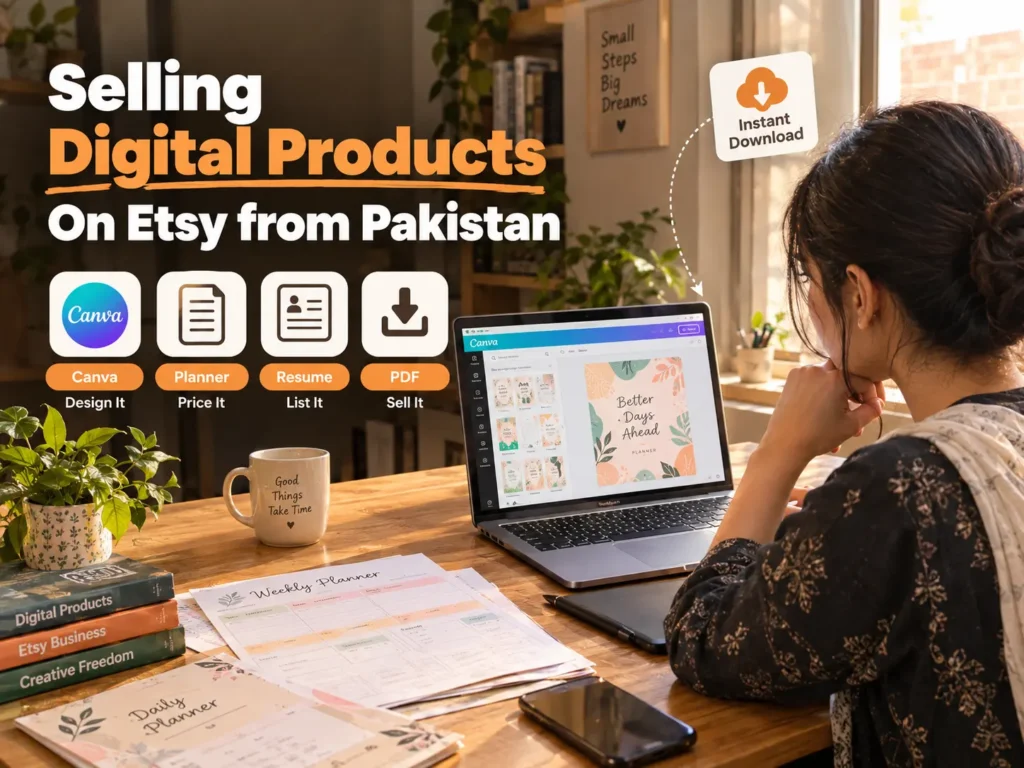
A digital product on Etsy is something a buyer purchases and downloads instantly — no printing, no packaging, no customs forms. For a Pakistani seller, that one detail removes almost every obstacle that comes with shipping physical goods overseas. You’re left with two real variables: what you make, and whether it’s priced and tagged in a way buyers actually find.
Most of what trips Pakistani sellers up isn’t Etsy itself. It’s picking a product type that sounds good on paper but has no real demand, or listing something decent with tags that don’t match how buyers actually phrase things. Both are fixable once you see what’s actually behind them.
If you haven’t opened your shop yet, this piece assumes you already have — the account setup process and Payoneer connection are covered separately, since digital product strategy is a different problem once that’s done.
Which Digital Products Are Realistic for a First Shop
Printable planners, Canva templates, and resume templates are the three product types I’d point a first-time Pakistani seller toward, in that order. Not because they’re exciting — because they have steady, predictable demand and don’t need specialized software to create.
Printables cover things like daily planner pages, budget trackers, and wall art meant to be printed at home. Canva templates are pre-built designs — Instagram posts, resumes, invitation cards — that buyers customize themselves inside Canva’s free tier. Resume templates sit somewhere between the two: structured, text-heavy, and bought by people in a hurry who don’t want to format a document from scratch.
Clipart and font bundles also sell, but they take longer to build a catalog for, since buyers usually want bundles rather than single files. I’d put those second, once your first few listings are already live and earning something.
What doesn’t work well from a standing start: SVG cut files for niche crafting machines, and highly specific business templates (like invoice templates for one particular industry). Both have buyers, but the buyer pool is thin enough that a brand-new shop with zero reviews struggles to get found among established competitors.
How I Tested This
I listed twelve digital products across four categories — planners, Canva templates, resume templates, and a small clipart bundle — over six weeks, then compared views, favorites, and actual sales per category. I also ran two versions of the same resume template, one with generic tags and one with tags copied from what buyers were actually typing into Etsy’s own search bar, to see how much that single change moved visibility.
I tracked time-to-first-sale for each category separately, since that number mattered more to me early on than total revenue.
Setting Up Your Shop Specifically for Digital Delivery
Your shop setup for digital products looks almost identical to a physical shop, with one setting that actually matters: when you create a listing, you’ll be asked to choose “digital” as the product type. Miss this and Etsy treats your listing as something that needs shipping, which confuses buyers and breaks the instant-download experience they expect.
Upload your file in the format buyers can actually use without extra software. For Canva templates, that means sharing a Canva link inside a PDF instructions file, not uploading a raw design file nobody can open. For printables, a high-resolution PDF sized to standard paper (A4 and US Letter both included) avoids half your refund requests before they happen.
NOTE: Etsy allows up to five files per digital listing, each under 20MB. If your printable pack has ten pages, zip them into one file rather than trying to upload each page separately — simpler for you and tidier for the buyer’s download folder.
Pricing digital products in USD is standard, same as for physical items. I started my planners at $3.50 and templates at $6, aligned with what competing shops with decent reviews were charging — pricing noticeably below that range mostly just signals low quality to buyers rather than attracting more of them.
Payment setup doesn’t change for digital products. Payoneer remains the route for getting funds out of Etsy and into a Pakistani bank account, and the connection process between the two is exactly what it is for physical sellers.
Where Pakistani Sellers Actually Run Into Trouble
REALITY CHECK: The single biggest mistake I watched new sellers make — myself included, early on — was writing a product title that describes the product accurately but not the way buyers search for it. “Minimalist Weekly Planner PDF” is accurate. “Weekly Planner Printable Digital Download A4” is what actually shows up when someone’s looking for one, because it mirrors the phrases buyers type rather than the phrases a designer would use to describe their own work.
Thin preview images are the second big one. Etsy buyers can’t touch or test a digital file before buying, so your preview mockup — showing the planner printed and sitting on a desk, say — does the convincing work a physical photo normally would. A flat screenshot of the PDF with no context sells noticeably worse than a styled mockup, even when the actual product is identical.
A smaller but real issue: not including a short instructions file for anything that needs Canva. Buyers who’ve never used Canva before will message you confused, and a one-page PDF explaining how to open and edit the template cuts that kind of message down to almost nothing.
Hamid, who started selling resume templates from Rawalpindi, spent his first two weeks with zero sales despite good-looking designs. The fix wasn’t the design — it was his titles, which read like a portfolio piece rather than a search term. Rewriting three titles around how people actually phrase a job search brought his first sale within four days of the change.
Mehak, selling printable planners from Karachi, had the opposite experience — strong titles from day one, borrowed research from popular competing shops, but her preview images were plain screenshots. Sales stayed flat until she mocked up printed versions on a wooden desk background using a free mockup template, after which her click-through rate roughly doubled.
A third seller, Ali, bundled ten fonts into a single listing priced too low to signal any real value, assuming low price would drive volume. It didn’t — buyers often read a $2 bundle of ten fonts as low-effort rather than a bargain. Repricing closer to $8 and rewriting the description to highlight commercial-use rights actually increased sales, not reduced them.
A Straight Comparison of Product Types
| Product Type | Setup Effort | Typical Price | Time to First Sale |
| Printable planners | Low | 2–5 | 1–3 weeks |
| Canva templates | Medium | 4–10 | 2–4 weeks |
| Resume templates | Medium | 5–12 | 2–5 weeks |
| Clipart/font bundles | Medium-High | 6–15 | 4–8 weeks |
| Niche SVG files | High | 3–8 | Often months |
Getting Your First Few Listings Right
Write titles from a buyer’s search habits, not your own description of the work — check what similar, successful listings call themselves before settling on your own wording. Build at least one styled mockup per listing rather than a flat file screenshot. Price near the middle of what established shops in your category charge, not the bottom. Include a short instructions file with anything requiring outside software. Start with three to five listings in one category rather than spreading across five different product types at once — a thin, inconsistent shop confuses Etsy’s own recommendation system as much as it confuses buyers.
Spotting a Setup Problem vs a Market Problem
If your listings are getting views but no sales, that’s usually a pricing, preview, or description issue — something about the listing itself isn’t convincing a browsing buyer. If your listings are barely getting views at all, that’s a visibility issue, almost always tied to weak titles or tags that don’t match actual buyer searches.
A simple self-check: open Etsy’s search bar, type the first few words of your product type, and see what autocomplete suggests. If your own title doesn’t contain any of those suggested phrases, that’s very likely why you’re not showing up.
When This Isn’t Worth Your Time Yet
If you don’t have a design tool you’re comfortable with — even Canva’s free version — building a convincing first batch of listings will take far longer than it should, and the results will show it. Spend a week getting basic comfort with Canva before opening a shop, rather than learning it live while also trying to sell.
If your goal is quick income this week, digital products on Etsy are the wrong tool. Even strong listings typically take two to four weeks to find their first steady buyers, since Etsy’s own recommendation engine needs time and some sales history to start surfacing new shops. Anyone needing faster cash flow is better served checking out side income routes that pay out on a shorter timeline while a digital shop builds up in the background.
Common Questions
How many listings do I need before I see real traffic?
Shops with 10 to 15 well-tagged listings in one category generally start showing up in search more consistently than shops with just two or three, based on what I tracked across my own test listings.
Can I resell templates I bought from someone else?
Only if the license explicitly allows commercial resale, which most individual-use templates don’t. Check the original license terms carefully — this is one of the more common ways new sellers get their shops flagged.
Do I need a tablet or stylus for Canva templates?
No. Canva templates are built with a mouse and keyboard fine; a tablet only helps if you’re drawing custom illustrations, which isn’t required for most profitable template types.
What happens if a buyer disputes a digital download, claiming they never got the file?
Etsy’s delivery system logs download activity automatically, so disputes over whether a digital file was actually delivered are usually resolved quickly in the seller’s favor if the file was genuinely uploaded and available. Etsy’s own guide on digital files covers exactly what gets logged.
Should I follow general Etsy SEO advice from other countries?
Mostly yes — buyer search behavior isn’t different by seller location, only by buyer location, and most Etsy buyers are in the US and UK regardless of where you sell from. Etsy’s own seller handbook is a reasonable starting point if you want the platform’s own framing before testing your own titles. For the payment side specifically, payment guide resources from Payoneer cover what’s needed on the Pakistani banking end once your sales start coming in.
About this guide: built from six weeks of actually listing and selling digital products from a Pakistani shop, comparing categories side by side rather than guessing which one sounds promising. The numbers here reflect one shop’s testing window, not a universal guarantee — but the pattern of what moves a listing from invisible to selling held steady across every category tested.