Selling AI Digital Products: What You’ll Really Earn
Quick Answer: Most people selling AI-made digital products earn somewhere between nothing and a few hundred dollars a month in their first six months. A smaller group building a real catalog — multiple products, a specific niche, consistent listing activity — reaches $500 to $2,000 monthly within a year. The sellers making $5,000 or more a month are a genuine minority, and they got there through volume and time, not a single lucky product. If you’re weighing whether selling AI digital products can realistically pay your bills soon, the honest answer is: probably not in month one, and possibly yes by month twelve if you treat it like a real business instead of a one-time listing.
What you’ll learn: → Real income ranges pulled from published seller data across printables, ebooks, and prompt packs → Why the “average” income figure you’ll see quoted everywhere is close to meaningless for a beginner → What separates a $50-a-month shop from a $2,000-a-month one → A realistic timeline broken down by month, not a vague promise → A self-check to figure out where you’re likely to land before you invest a month of work
The Honest Range, Before Anything Else
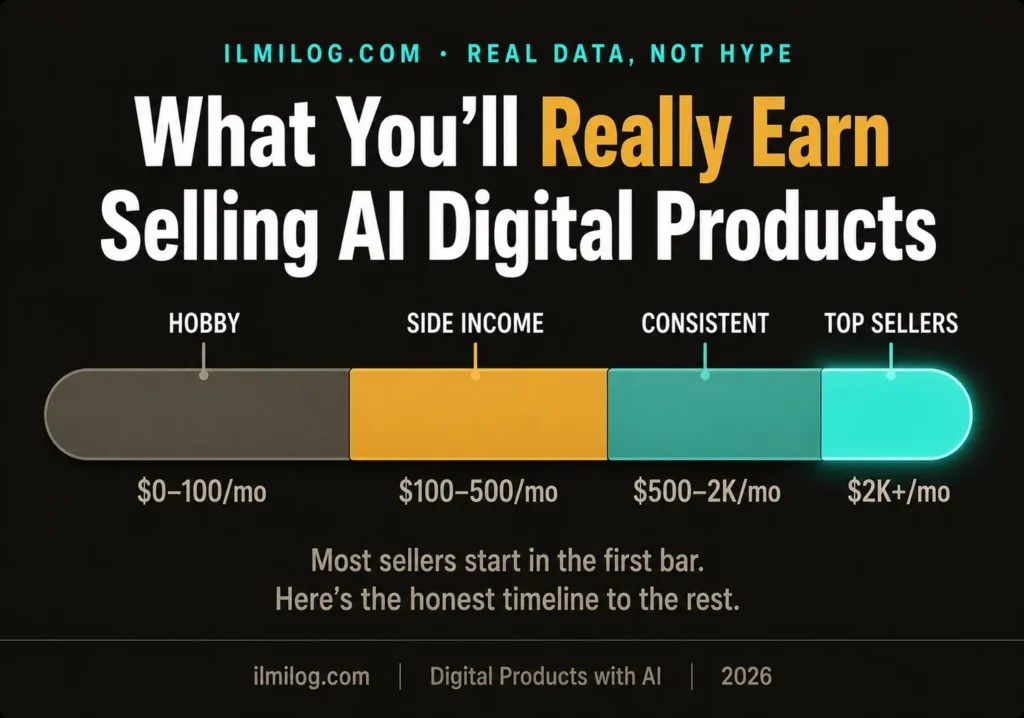
Selling any AI-made digital product — printables, ebooks, prompt packs, templates — breaks down into roughly four income bands, and almost every seller starts in the first one whether they expect to or not.
Hobby level (most first attempts): under $100 a month, often under $20. This isn’t failure. It’s what a single new listing with no search history and no audience produces almost everywhere.
This whole category — printables, ebooks, prompt packs, templates — is part of a broader shift toward building income streams around AI tools, and our complete guide to creating and selling digital products with AI covers the full landscape if you’re still deciding which product type to start with.
Real side income: $100 to $500 a month, usually reached somewhere between month three and month six, once a shop has a handful of listings with some search visibility.
Consistent secondary income: $500 to $2,000 a month, typically requiring a real catalog — more than five or ten products, a defined niche, and consistent new listings over six to twelve months.
Established seller income: $2,000 to $15,000+ a month. This band exists and is well documented, but it’s a genuine minority of sellers, and almost every seller in it has been doing this for a year or more with a large, focused catalog.
Why the Average Number You’ll See Quoted Is Misleading
You’ll see headline numbers like “Etsy sellers earn $35,000 a year on average” floating around, and they’re not fabricated — they come from real revenue data. What they don’t tell you is how skewed that distribution is. A small number of high-volume sellers pull the average far above what a typical seller experiences, which is why the median tells a very different story than the average does.
Digital products specifically make this worse, because “digital products” on a platform like Etsy includes everyone from someone who listed three printables last month to shops with hundreds of listings built over years. Lumping them into one average number is why the headline figures you see in most “how much can you make” articles feel disconnected from what a beginner experiences in their first few months. The median — the middle point, where half of sellers earn more and half earn less — is a far more honest number, and it’s consistently lower than the average you’ll see quoted in marketing content.
What the Real Data Shows, Product by Product
Printables and Digital Downloads (Etsy)
Published seller income data for Etsy digital sellers shows beginners in their first six months typically earning $100 to $500 a month, with growth to $500 to $2,000 monthly in the six-to-twelve-month range as a shop builds search history and a wider catalog. Etsy’s own fee structure — a $0.20 listing fee, 6.5% transaction fee, and roughly 3% payment processing — takes a real bite out of low-priced items, which is part of why sellers who bundle multiple printables into one higher-priced listing tend to out-earn sellers pricing everything individually at a few dollars each.
If you’re building this specific product type, our full guide to selling AI-generated printables on Etsy covers the mockup, SEO, and disclosure details that most directly affect whether a shop reaches that second income band.
Ebooks (Amazon KDP)
This is where the catalog-size effect is most extreme and most honestly documented. Authors with one to three published books typically earn under $100 to $200 a month combined — not per book, combined. Income climbs meaningfully once a catalog reaches ten or more titles, since each additional book both sells on its own and re-activates interest in the earlier ones. Amazon’s own royalty structure pays 70% on ebooks priced between $2.99 and $9.99, which is generous compared to traditional publishing, but the 70% of a small number is still a small number until there’s more than one book generating it.
Our step-by-step guide to writing an ebook with AI in a weekend is written with this exact reality in mind — the first book is a proof of concept, not a paycheck.
Prompt Packs
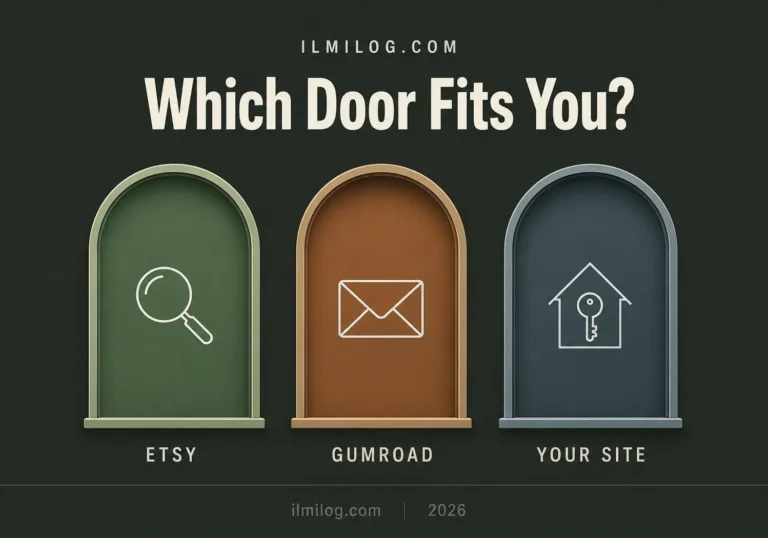
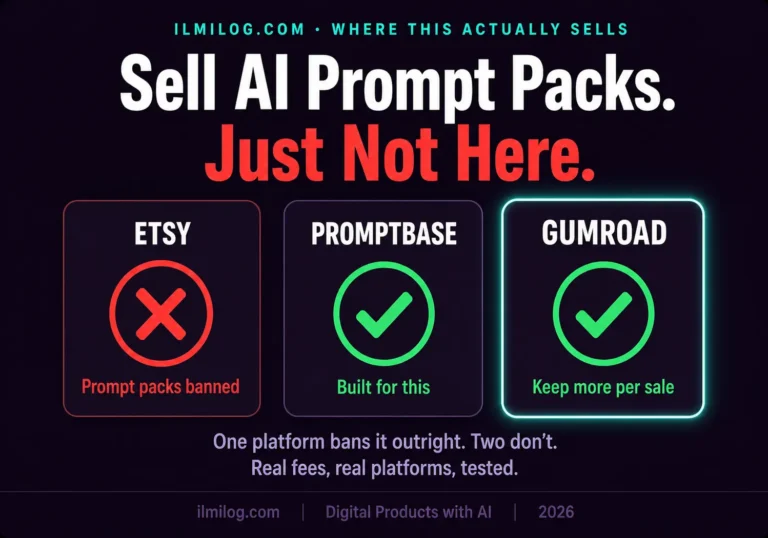
This category skews toward smaller absolute numbers but faster time-to-first-sale, especially on dedicated marketplaces with built-in buyer traffic. Beginners typically see $100 to $500 a month from a handful of listings; sellers who niche into a specific profession, price full documented packs rather than individual prompts, and add a direct sales channel alongside a marketplace listing can reach considerably more over time. Direct-sales platforms like Gumroad keep more of each sale than marketplace listings do, which matters increasingly once you have any audience driving traffic yourself. Our guide to building and selling prompt packs breaks down exactly which platforms allow this product type and which don’t.
Cross-Checking This Against What I’ve Actually Built
Across this series, I’ve built and listed one real product in each of these categories — a printable shop, a short ebook, and a documented prompt pack — tracking real numbers rather than projected ones for each. None of these individually ran long enough to represent a mature shop’s income, and I want to be upfront about that limitation rather than stretch a few weeks of data into a bigger claim than it supports.
What lined up consistently with the published data above: early sales were slow and modest regardless of product quality, search visibility mattered more than I expected relative to design quality, and the products with the narrowest, most specific niche got found faster than the broader ones. What that means practically: the published income ranges above aren’t just industry marketing copy — they matched what a genuinely new, single-product listing produced in each category I tested.
What Actually Separates Low Earners From High Earners
Catalog size, more than any single factor
This shows up most clearly in the ebook data, where authors with ten or more books earn several times what authors with one or two books earn — not because later books are better written, but because each additional product both sells independently and drives search visibility to the rest of the catalog.
Niche specificity
A product built for “everyone interested in X” competes against thousands of similar listings. A product built for one specific job, situation, or profession competes against almost nothing and converts at a meaningfully higher rate.
Consistency over intensity
Sellers who add new listings steadily over months consistently outperform sellers who publish a large batch once and stop. Platforms reward — and buyers notice — an active, growing shop over a static one.
A direct sales channel eventually, not immediately
Marketplaces are the right starting point with no existing audience. The sellers earning at the higher end of these ranges almost universally add a direct channel once they have any traffic to send there, since it keeps a larger share of each sale.
A Realistic Timeline, Month by Month
Month 1:
Little to no income is normal. This month is about publishing your first product and understanding the platform, not earning.
Months 2–3:
First sales typically arrive here if your niche and listing quality are solid. Income is usually still under $100 total.
Months 4–6:
With three to five listings and some search history, $100 to $500 a month becomes realistic for a focused shop.
Months 6–12:
A genuine catalog — ten or more products, consistent new listings, a specific niche — is what moves a seller into the $500 to $2,000 monthly range.
Year 2 and beyond:
The $2,000-plus range belongs almost exclusively to sellers who treated the first year as catalog-building rather than expecting month-one results.
Mistakes That Keep Income Stuck at Zero
Publishing once and waiting
A single listing, no matter how good, rarely generates meaningful income on its own. Income here is a function of catalog size and consistency, not any individual product’s quality.
Going broad instead of specific
Products built for the widest possible audience consistently underperform products built for one specific, well-defined buyer.
Comparing your month one to someone else’s year two
The $10,000-a-month numbers you’ll see in success stories almost always belong to sellers with a year or more and a large catalog behind them, not a first product.
Ignoring which platform fits your traffic situation
Paying for a direct-sales setup with zero audience, or staying on a high-fee marketplace long after you have traffic of your own to send elsewhere, both quietly cap your income in opposite directions.
When This Isn’t Going to Pay Off for You
Skip this if: you need income within the first month — nothing in the realistic data above supports that timeline for a first product, regardless of product type. Skip it too if you’re only willing to publish once; the entire income curve here depends on catalog size, and a single listing rarely escapes the lowest income band no matter how well it’s made.
This is worth pursuing if: you can commit to publishing consistently over six to twelve months, you’re willing to niche down into something specific rather than broad, and you’re treating the first few products as market research rather than expecting them to be profitable immediately.
Self-Check: Where Will You Likely Land?
- I’m planning to publish one product and see what happens → realistically, the hobby-level band, under $100 a month
- I’m planning three to five products in a specific niche over a few months → the $100–$500 band is realistic within six months
- I’m planning ten or more products with consistent new listings over a year → the $500–$2,000 band becomes realistic
- I already have some audience or traffic I can direct to a listing → you’ll likely reach each band faster than these timelines suggest
- I’m expecting meaningful income within the first month → worth resetting this expectation before you start, based on what the data shows
Honest Verdict
| What the Data Supports | What It Doesn’t Support |
| $100–$500/month realistic within 3–6 months for a focused shop | Meaningful income from a single listing in month one |
| $500–$2,000/month realistic with a real catalog over 6–12 months | “Passive income” framing that ignores ongoing listing work |
| $2,000+/month achievable, but typically after a year+ and a large catalog | Treating top-seller numbers as a realistic near-term benchmark |
| Niche-specific, consistently updated shops outperforming broad ones | Broad, one-time listings competing successfully against established niche shops |
Best for: people willing to treat this as a slow-building side business measured in months and products, not a single big win. Skip it if: you need income on a short timeline — the realistic data doesn’t support that for a first product in any category covered here.
FAQ
Q: Can you actually make a full-time income selling AI digital products?
Yes, but the sellers who do almost universally have a large catalog built over a year or more, not a handful of products. Treat full-time income as a long-term outcome, not a starting expectation.
Q: Which product type pays the most per item?
Ebooks and bundled printable packs tend to have the highest per-sale value. Individual prompts and single printables have the lowest, which is why bundling into higher-priced, more complete products consistently outperforms selling small pieces individually.
Q: How long before a new shop or catalog makes its first sale?
Typically two to eight weeks with a reasonably specific niche and decent listing quality. Longer than that usually signals a niche that’s too broad or SEO that needs work, not a fundamentally broken approach.
Q: Is it worth doing this if I can only commit a few hours a week?
Yes, but adjust your income expectations proportionally — the timeline estimates above assume steady, if modest, weekly effort. Less consistent effort simply stretches the same milestones further out.
Q: Do platform fees really make that much difference to income?
Yes, more than most beginners expect. On low-priced items especially, combined listing, transaction, and payment processing fees can take 15% to 20% of a sale, which is why pricing and platform choice both directly affect real take-home income, not just gross sales.
Final Recommendation
Plan for month one to be close to $0 and treat it as normal, not a sign something’s wrong. The realistic path to $500 or more a month runs through a real catalog built over several months, not a single well-made product. If you’re still deciding which product type fits your specific skills and time before you commit to building that catalog, the Digital Life Blueprint Generator walks through a short set of questions and points you toward the format most likely to fit, so the months you spend building a catalog go toward the right product from the start.
Researched and written by the ilmilog.com editorial team. Income figures cross-referenced against published seller income data for Etsy digital sellers, Amazon KDP authors, and prompt marketplace sellers, alongside results from products built and tested across this series, through July 2026. Editorial policy: income ranges reflect published data and our own tracked results, not projections or guarantees — individual results vary by niche, effort, and market conditions.