Sell AI Prompt Packs Online (Not on Etsy — Here’s Why)
Quick Answer: You can build a real income stream from prompt packs, but not everywhere you’d assume. Etsy explicitly bans standalone prompt bundles — it’s been an official policy since 2024 and gets enforced. The platforms where this works are dedicated prompt marketplaces, Gumroad, and your own store. What separates a pack that sells from a random list of prompts isn’t the number of prompts inside it. It’s documentation: tested examples, clear instructions, and a niche specific enough that a buyer feels like it was built for their exact job.
What you’ll learn: → Which platforms allow prompt pack sales, and which ones will get your listing pulled → What buyers are really paying for when a $30 prompt pack sells while a free version of the same idea doesn’t → A real cost breakdown across the three main platforms, fees included → The documentation habit that turns “some prompts I wrote” into a product worth paying for → A straight answer on when this product type isn’t worth your time
What Makes a Prompt Pack Actually Sellable
Anyone can copy forty prompts into a document and call it a pack. Almost none of those sell, because a buyer isn’t paying for the prompt text itself — a prompt is a sentence, and sentences aren’t hard to write. They’re paying for the testing they don’t have to do themselves: knowing which phrasing produces a usable result on the first try, which variations to use for different situations, and what output to expect before they spend their own time finding out.
Prompt packs are one of several ways to turn AI tools into an actual income stream — if you’re weighing this against other formats, our complete guide to creating and selling digital products with AI covers the full landscape and where prompt packs fit into it.
That’s the entire gap between a free prompt list floating around social media and a pack someone pays $25 to $60 for. The paid version has been run enough times that the seller can say, with confidence, what happens when you use it — and that confidence is what a rushed, untested pack can’t fake. Buyers can tell the difference within the first two prompts they try.
Where You’re Allowed to Sell This (and Where You’re Not)
This matters more here than almost any other digital product type, and it’s the part most beginner guides get flat wrong or leave out entirely.
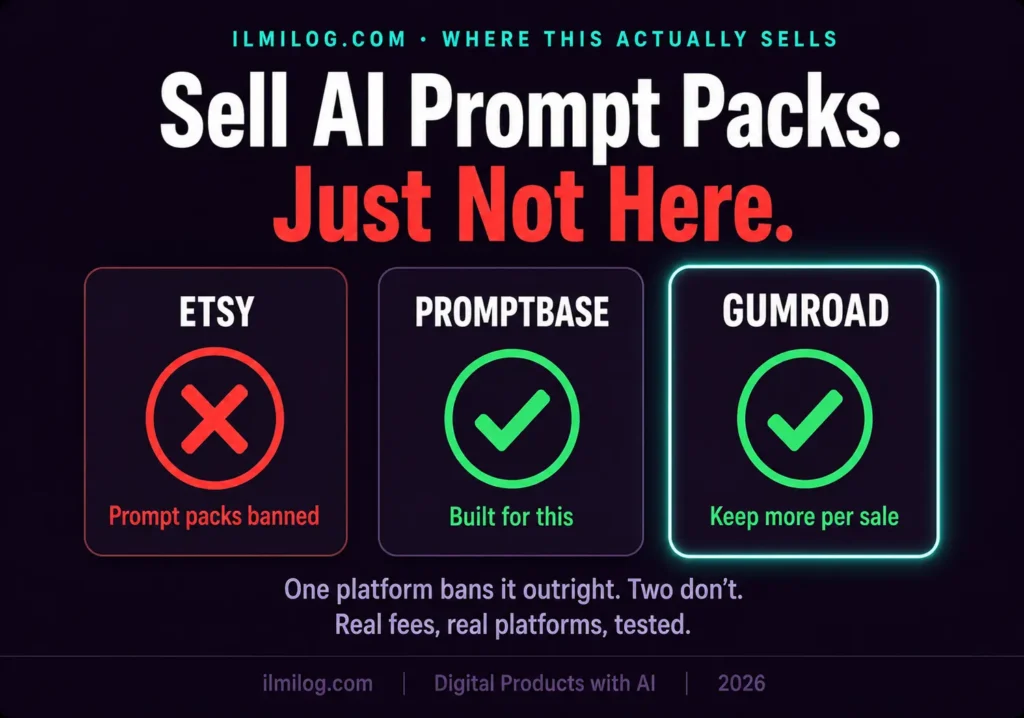
Etsy does not allow prompt packs as a standalone listing. Etsy’s Creativity Standards are explicit about this: prompts are treated as part of the creative process, not a finished product on their own, and selling a bundle of them separately from any finished output is a policy violation, not a gray area. If you’ve seen an older guide claiming Etsy is a good place to list prompt packs, check the publish date — this restriction has been in place since 2024 and enforcement has only tightened since.
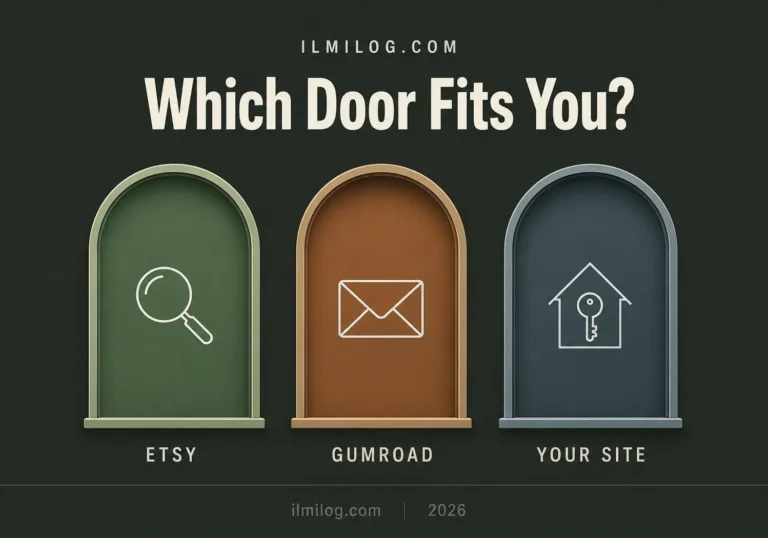
Here’s where this works: dedicated prompt marketplaces built specifically for this product type, like PromptBase, general digital marketplaces such as Gumroad that don’t restrict the format, and your own store once you have any kind of audience. Each comes with a different trade-off between built-in traffic and how much of each sale you keep, which is the next thing worth understanding before you pick one.
How I Tested This — One Real Pack, Three Platforms
For this guide, I built one real prompt pack — a documented set for a specific professional use case, tested and refined over about a week — and listed it across a marketplace and a direct-sales platform to compare what happened in practice, not just what the fee pages promise.
What I tracked:
- How much traffic came from marketplace discovery versus needing to drive my own
- What percentage of a sale each platform kept after fees
- Which listing details changed conversion the most — examples included, or examples described
- How long it took to get a pack from “written” to “documented well enough to sell”
What surprised me: the marketplace generated sales faster with zero promotion, but the direct-sales version, once I had even a small amount of outside traffic pointed at it, kept noticeably more of each sale. Neither option is universally better — it depends entirely on whether you already have any audience at all before you list.
Building a Pack Step by Step
Step 1: Pick a Niche a Buyer Would Search For
“ChatGPT prompts for entrepreneurs” competes against an enormous number of nearly identical listings. “Prompts for Etsy shop owners writing product descriptions” or “prompts for HR professionals drafting job postings” competes against almost nothing, because it names a specific job a specific person does. The narrower and more job-specific the niche, the easier the entire rest of the process becomes.
Step 2: Write and Run Every Prompt
This is the step that gets skipped most often, and it’s the one that decides whether the pack is worth anything. Every prompt in the pack needs to have been run, not just written — if you haven’t seen what it produces yourself, you can’t honestly tell a buyer what to expect. If you’re still deciding which AI tool to test prompts in, our tested roundup of the best AI tools for digital products breaks down which ones are worth using for this kind of iterative testing work.
Step 3: Document, Don’t Just List
A sellable pack includes what each prompt is for, one real example output (not a hypothetical), and any variation notes — what to change if the first result isn’t quite right. This is the single biggest gap between packs that get refund requests and packs that get repeat buyers. If you want a sense of what well-documented packs in this category look like before building your own, our tested roundup of the best AI prompt packs breaks down several real examples and what separates the useful ones from the thin ones.
Step 4: Price It Like a System, Not a List
Single prompts sold individually for a few dollars are a race to the bottom that’s already been lost. Full niche-specific packs priced between $25 and $60 are where sellers make consistent income, because the price reflects the testing and documentation, not the word count of the prompts themselves.
Step 5: Choose Your Platform Based on Whether You Have Traffic
If you have no existing audience, a dedicated prompt marketplace gets you in front of buyers who are already looking, at the cost of a meaningful cut of every sale. If you have any following at all — even a small one — a direct platform like Gumroad keeps more of each sale but requires you to bring the buyers yourself; its published fee structure is worth checking directly since it changes depending on whether a sale comes through your own link or the platform’s internal discovery feed.
Platform Costs Compared
| Platform | Typical Fee | Built-In Traffic | Best For |
| Dedicated prompt marketplace | ~20% per sale | Strong — buyers actively searching | Getting first sales fast with zero audience |
| Gumroad (direct link) | ~10% + $0.50 | None — you drive traffic | Sellers with any existing audience |
| Gumroad (Discover) | ~30% per sale | Moderate | A middle ground when direct traffic is thin |
| Your own store | Payment processing only, ~3% | None — fully self-driven | Established sellers scaling past marketplaces |
Mistakes That Keep a Pack From Selling
Listing prompts that were never tested
This is the fastest way to a bad review, because the gap between “should work” and “does work” is exactly what a buyer is paying to skip.
Trying to sell on Etsy
Beyond the policy risk, sellers who list here anyway are competing in a category the platform is actively suppressing, not one it’s promoting.
Going broad to seem more valuable
A 200-prompt pack covering ten unrelated topics sells worse than a tight 15-prompt pack built for one specific job. Buyers want a solution to their exact problem, not a library to sort through.
No real example output
A prompt description without a shown result asks the buyer to trust you blind. A real output, even an imperfect one with honest notes, builds far more trust than a polished-sounding promise.
Ignoring which platform matches your actual traffic situation
Choosing a direct-sales platform with zero audience, or paying marketplace fees when you already have buyers ready to come to you directly, both waste money in opposite directions.
When This Is Not the Right Product for You
Skip this if: you’re not willing to run and refine every prompt before listing it — a pack built on untested prompts fails fast once real buyers try it. Skip it too if you don’t have any specific professional knowledge to niche into; the prompt packs that sell consistently come from sellers who understand the exact job a buyer is trying to do, not from generic “prompts for everyone” collections.
This is a good fit if: you have real experience in a specific field and can write prompts that reflect how that work really gets done, you’re willing to document honestly rather than oversell, and you’re comfortable starting on a marketplace to validate demand even if it means giving up a larger cut of early sales.
Decision Checklist
- I’ve picked a niche specific enough that a buyer could search for it directly → this is the actual foundation of everything else
- Every prompt in my pack has been run and produces a result I’ve seen myself → non-negotiable before listing
- I understand Etsy doesn’t allow this product as a standalone listing → prevents wasted setup time
- I’ve priced the full pack, not per-prompt → reflects the testing, not the word count
- I have a plan for which platform fits my current traffic situation → marketplace if you have none, direct if you have some
Honest Verdict
| What Works | What Doesn’t |
| Tight, niche-specific packs with real tested examples | Broad, generic packs covering too many topics at once |
| Listing on a marketplace built for prompts, or Gumroad | Listing standalone prompt bundles on Etsy |
| Pricing the full documented system, $25–$60 | Selling individual prompts for a few dollars each |
| Documenting variation notes for imperfect results | Presenting every prompt as guaranteed to work perfectly |
Best for: sellers with real professional knowledge in a specific field who are willing to test what they’re selling before listing it.
Skip it if: you’re hoping to repackage generic prompts with no testing or niche focus — that category is already oversaturated and buyers can tell.
FAQ
Q: Can I sell prompt packs on Etsy?
No. Etsy’s Creativity Standards explicitly prohibit standalone prompt bundles as a listing category. This has been policy since 2024, and it’s actively enforced, not a technicality worth risking.
Q: Where’s the best place to sell prompt packs with no existing audience?
A dedicated prompt marketplace. You’ll give up a larger percentage of each sale, but the built-in buyer traffic matters more than the fee difference when you’re starting from zero.
Q: How much can a prompt pack realistically earn?
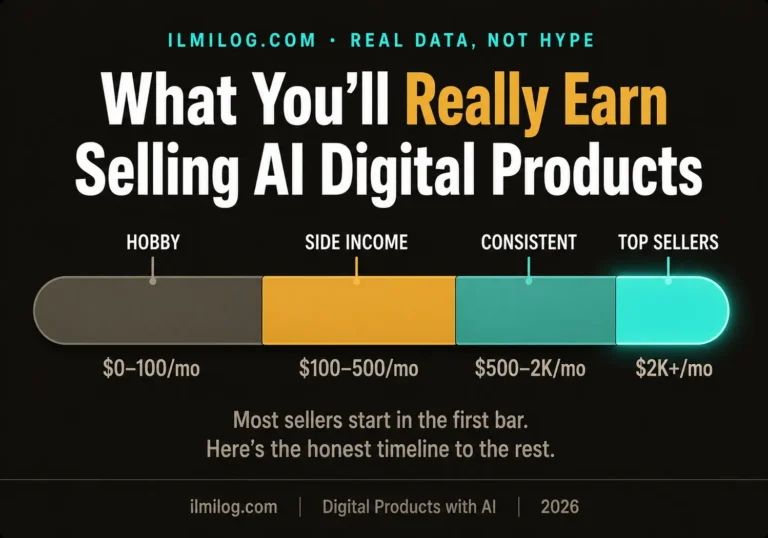
Beginners with a handful of listings typically see $100 to $500 a month. Sellers with a tight niche, direct sales, and a growing catalog can reach considerably more, but that takes sustained work, not a single lucky listing.
Q: Do I need design skills to sell prompt packs?
No. The product is the tested prompts and documentation, not visual design. A clean, readable document matters more than polished graphics here.
Q: How many prompts should a first pack include?
Fewer than you’d think. A focused 10 to 20 prompt pack solving one specific job well outperforms a large, unfocused collection almost every time.
Final Recommendation
Start with one niche you genuinely understand, test every prompt before you write a word of the listing, and pick your platform based on whether you have an audience yet — not on which one looks the most profitable on paper. If you’re still deciding whether prompt packs are the right digital product for your specific skills versus an ebook, a printable, or something else entirely, the Digital Life Blueprint Generator walks through a short set of questions and points you toward the format most likely to fit before you spend a week building the wrong one.
Researched and written by the ilmilog.com editorial team. Process tested by building and listing one real documented prompt pack across a marketplace and a direct-sales platform through July 2026. Platform policies and fee figures confirmed against official sources as of July 2026. Editorial policy: we test the processes we recommend before publishing.